Pillars of Ashoka
Videos
The pillars of Ashoka are a series of monolithic columns dispersed throughout the Indian subcontinent, erected—or at least inscribed with edicts—by the 3rd Mauryan Emperor Ashoka the Great, who reigne

One of the Pillars of Ashoka, in Vaishali
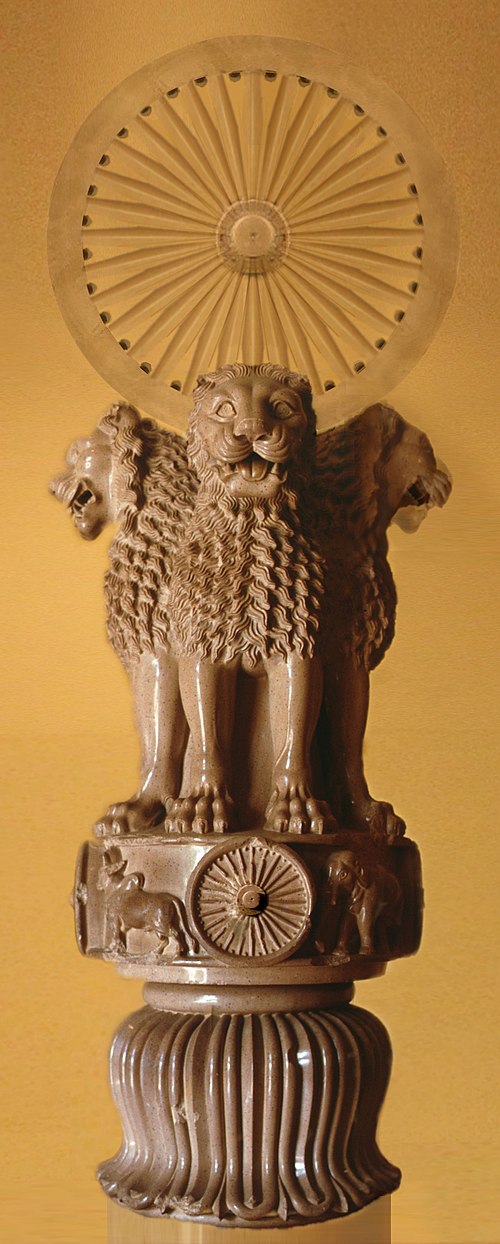
Lion Capital of Ashoka from Sarnath, with Wheel of the Moral Law (reconstitution). 3rd century BC.

Heliodorus pillar in Vidisha, India, 2nd Century BC

Shunga horseman carrying portable garuda standard, Bharhut 2nd Century BC
Edicts of Ashoka
Videos
The Edicts of Ashoka are a collection of more than thirty inscriptions on the Pillars of Ashoka, as well as boulders and cave walls, attributed to Emperor Ashoka of the Mauryan Empire who ruled most o
Pillars of Ashoka
…The pillars of Ashoka are a series of monolithic columns dispersed throughout the Indian subcontinent, erected—or at least inscribed with edicts—by the 3rd Mauryan Emperor Ashoka the Great, who reigned from c. 268 to 232 BC. Ashoka used the expression Dhaṃma thaṃbhā (Dharma stambha), i.e. "pillars…
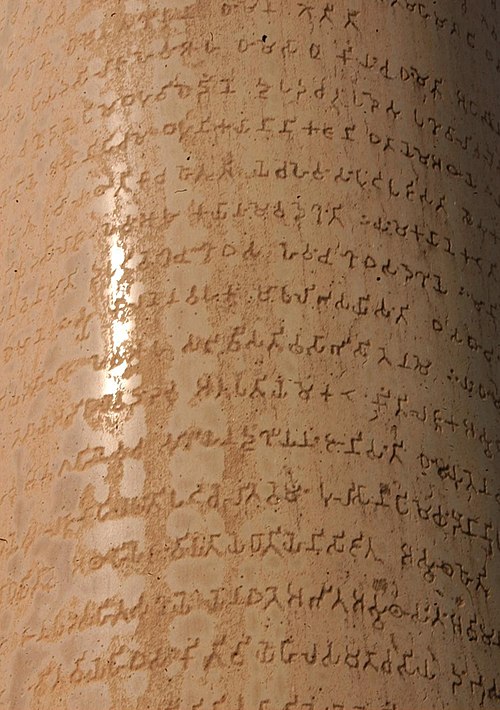
A Major Pillar Edict of Ashoka, in Lauriya Araraj, Bihar, India

Brahmi script consonants, and their evolution down to modern Devanagari, according to James Prinsep, as published in the Journal of the Asiatic Society of Bengal, in March 1838. All the letters are correctly deciphered, except for two missing on the right: 𑀰(ś) and 𑀱(ṣ).
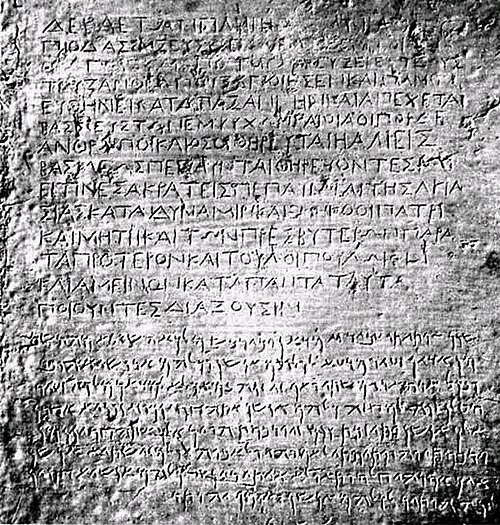
The first known inscription by Ashoka, the Kandahar Bilingual Rock Inscription, in Greek and in Aramaic, written in the 10th year of his reign (260 BCE).

Minor Rock Edict from Maski.