Piraeus Athena
Videos
The Piraeus Athena is a Greek bronze statue dated to the fourth century BCE. Named for the city in which it was found, it currently resides in the Archaeological Museum of Piraeus.
Portrait view of the Piraeus Athena


Piraeus Athena

Side view of Piraeus Athena

Marble copy of the statue of Eirene holding Ploutos. Currently in the Glyptothek in Munich
Aegis
Videos
The aegis or egis, as stated in the Iliad, is a device carried by Athena and Zeus, variously interpreted as an animal skin or a shield and sometimes featuring the head of a Gorgon. There may be a conn
The aegis on the so-called Athena Lemnia, a Roman statue type often identified as a copy of a work by the Classical Greek sculptor Pheidias (Dresden Skulpturensammlung)


Athena's aegis, with Gorgon, here resembles the skin of the serpent who guards the golden fleece (regurgitating Jason); cup by Douris, early fifth century BC (Vatican Museums)
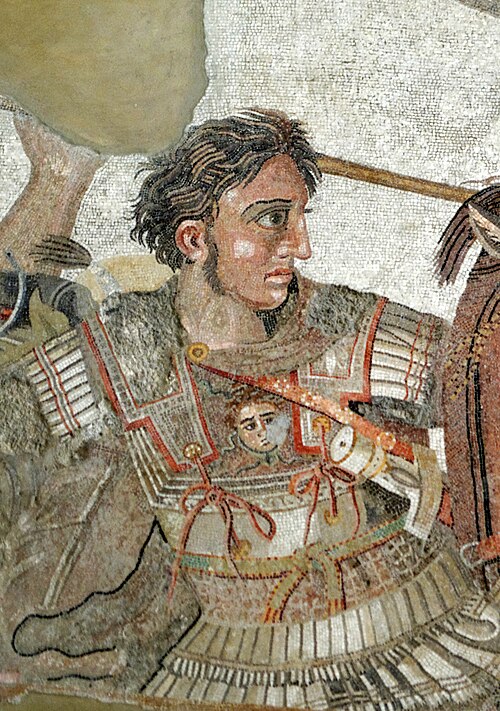
First century BC depiction of Alexander wearing the aegis on the Alexander Mosaic, Pompeii (Naples National Archaeological Museum)

Augustus shown with an aegis thrown over his shoulder as a divine attribute in the Blacas Cameo; the hole for the head appears at the point of his shoulder.