Plessy v. Ferguson
Videos
Plessy v. Ferguson, 163 U.S. 537, was a landmark United States Supreme Court decision ruling that racial segregation laws did not violate the U.S. Constitution as long as the facilities for each race
Justice Henry Billings Brown, author of the majority opinion in Plessy

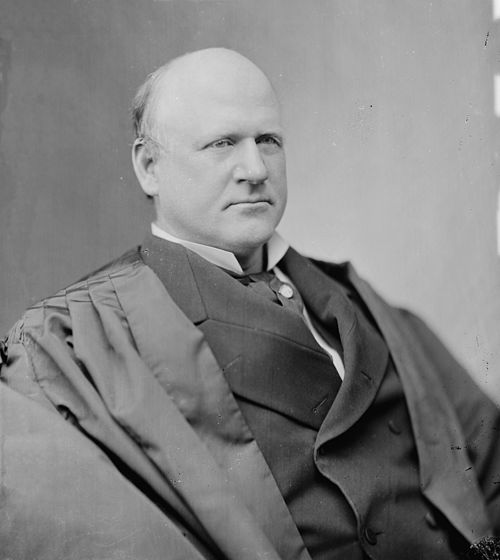
Justice John Marshall Harlan became known as the "Great Dissenter" for his fiery dissent in Plessy and other early civil rights cases.

An Oklahoma City streetcar terminal's "colored" drinking fountain, 1939

1904 caricature of "White" and "Jim Crow" rail cars by John T. McCutcheon
Homer Plessy
Videos
Homer Adolph Plessy was an American shoemaker and activist who was the plaintiff in the United States Supreme Court decision Plessy v. Ferguson. He staged an act of civil disobedience to challenge one
Plessy v. Ferguson
…racial segregation that had been passed in the American South after the end of the Reconstruction era in 1877. The underlying case began in 1892 when Homer Plessy, a mixed-race man, deliberately boarded a whites-only train car in New Orleans. By boarding the whites-only car, Plessy violated Louisiana's Separate…

A placard marks the place in New Orleans where Chris C. Cain arrested Homer Plessy on June 7, 1892.

Plessy’s tomb in New Orleans

A bronze plaque on the side of Plessy's tomb in Saint Louis Cemetery No. 1, New Orleans, Louisiana, describes his historical significance.