Pratītyasamutpāda
Videos
Pratītyasamutpāda, commonly translated as dependent origination, or dependent arising, is a key doctrine in Buddhism shared by all schools of Buddhism. It states that all conditioned dharmas arise in

Brick inscribed with the Sutra on Dependent Origination. Found in Gopalpur, Gorakhpur District, Uttar Pradesh. Dated c. 500 CE, Gupta period. Ashmolean Museum.

A circular schema of the 12 nidanas as understood in Theravada Buddhist scholasticism

In Tibetan Buddhism, the 12 nidanas are typically shown on the outer rim of a wheel of existence. This is a common genre of art found in Tibetan temples and monasteries. The three poisons (greed, hatred and delusion) sit at the very center of wheel.
Buddhism
Videos
Buddhism, also known as Buddhadharma and Dharmavinaya, is an Indian religion and philosophy based on teachings attributed to the Buddha, a South Asian wandering ascetic and religious teacher who lived
Pratītyasamutpāda
…Sanskrit: प्रतीत्यसमुत्पाद, Pāli: paṭiccasamuppāda), commonly translated as dependent origination, or dependent arising, is a key doctrine in Buddhism shared by all schools of Buddhism. It states that all conditioned dharmas (phenomena) arise in dependence upon other dharmas: "if this exists, that…

The Kamakura Daibutsu, a 13th-century bronze statue of the Buddha Amitābha in Kanagawa Prefecture, Japan

The Buddha, Tapa Shotor monastery in Hadda, Afghanistan, 2nd century CE

Maya Devi Temple marking the Buddha's birthplace in Lumbini, Nepal
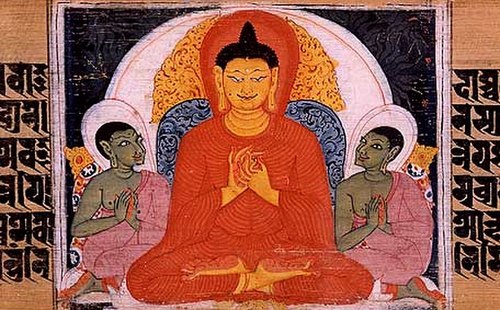
The Buddha teaching the Four Noble Truths. Sanskrit manuscript. Nalanda, Bihar, India