Processed meat is considered to be any meat that has been modified in order to either improve its taste or to extend its shelf life. Methods of meat processing include salting, curing, fermentation, smoking, boiling, frying, and/or the addition of chemical preservatives. Processed meat is usually composed of pork or beef or, less frequently, poultry. It can also contain offal or meat by-products such as blood. Processed meat products include bacon, ham, sausages, salami, corned beef, jerky, hot dogs, lunch meat, canned meat, chicken nuggets, and meat-based sauces. Meat processing includes all the processes that change fresh meat with the exception of simple mechanical processes such as cutting, grinding or mixing.
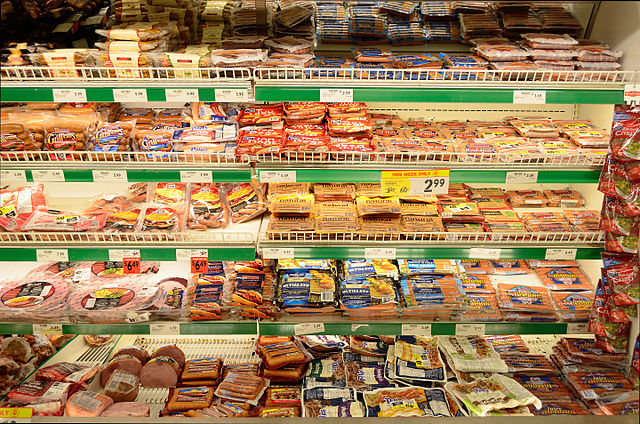
Various types of processed meat for sale at a grocery store
Salting is the preservation of food with dry edible salt. It is related to pickling in general and more specifically to brining also known as fermenting and is one form of curing. It is one of the oldest methods of preserving food, and two historically significant salt-cured foods are salted fish and salt-cured meat. Vegetables such as runner beans and cabbage are also often preserved in this manner.
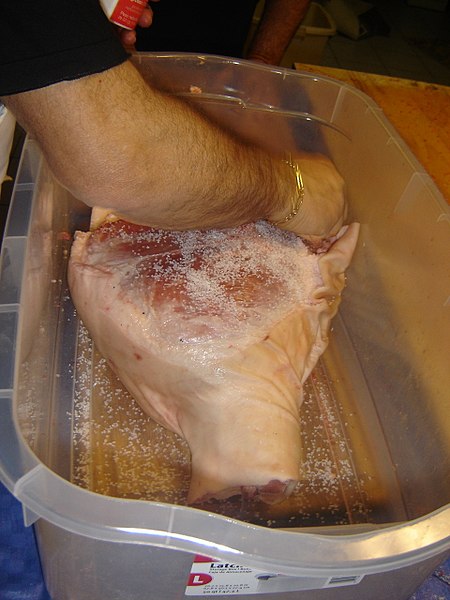
Sea salt being added to raw ham to make prosciutto
Bag of Prague powder #1, also known as "curing salt" or "pink salt." It is typically a combination of salt and sodium nitrite, with the pink color added to distinguish it from ordinary salt.
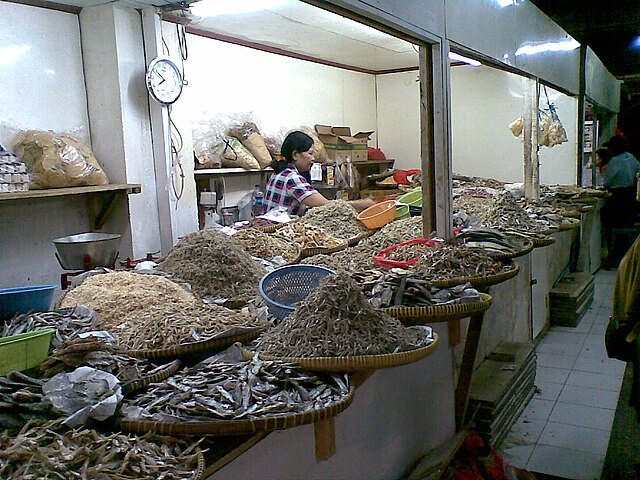
Various salted fish sold in a marketplace in a suburb of Jakarta, Indonesia