Proclamation of the Kingdom of Italy
The proclamation of the Kingdom of Italy happened with a normative act of the Savoyard Kingdom of Sardinia — the law 17 March 1861, n. 4761 — with which Victor Emmanuel II assumed for himself and for his successors the title of King of Italy. 17 March is commemorated annually by the anniversary of the unification of Italy, a national holiday established in 1911 on the occasion of the 50th anniversary, and also celebrated, in the Republican era, in 1961 and 2011.
Proclamation of the Kingdom of Italy
Carlo Bossoli: the royal procession at the opening of the Parliament of the Kingdom of Italy
King Vittorio Emanuele II assumes the title of King of Italy with the law n. 4671 of 17 March 1861 of the Kingdom of Sardinia.
The Kingdom of Italy was a state that existed from 17 March 1861, when Victor Emmanuel II of Sardinia was proclaimed King of Italy, until 12 June 1946, when the monarchy was abolished, following civil discontent that led to an institutional referendum on 2 June 1946, which resulted in a modern Italian Republic. The kingdom was established through the unification of several states over a decades-long process, called the Risorgimento. That process was influenced by the Savoy-led Kingdom of Sardinia, which can be considered Italy's legal predecessor state.
Notice of the proclamation of the Statuto Albertino in 1848 by King Charles Albert of Sardinia
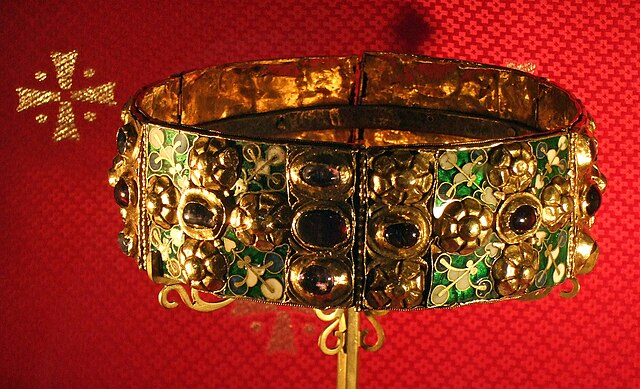
The Iron Crown of Lombardy, for centuries a symbol of the kings of Italy
Victor Emmanuel II (r. 1861–1878)
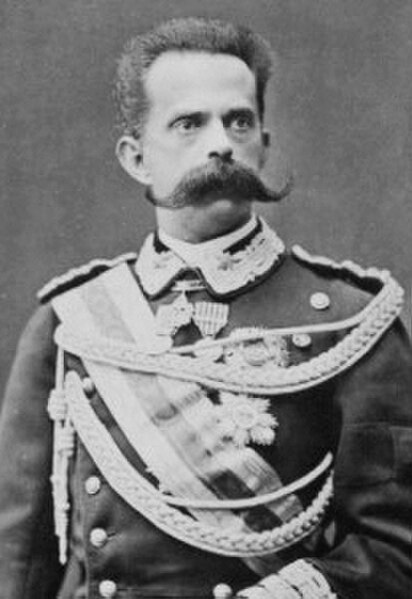
Umberto I (r. 1878–1900)