Raʻiātea
Videos
Raʻiātea or Raiatea is the second largest of the Society Islands, after Tahiti, in French Polynesia, in the South Pacific Ocean. The island is widely regarded as the "centre" of the eastern islands in
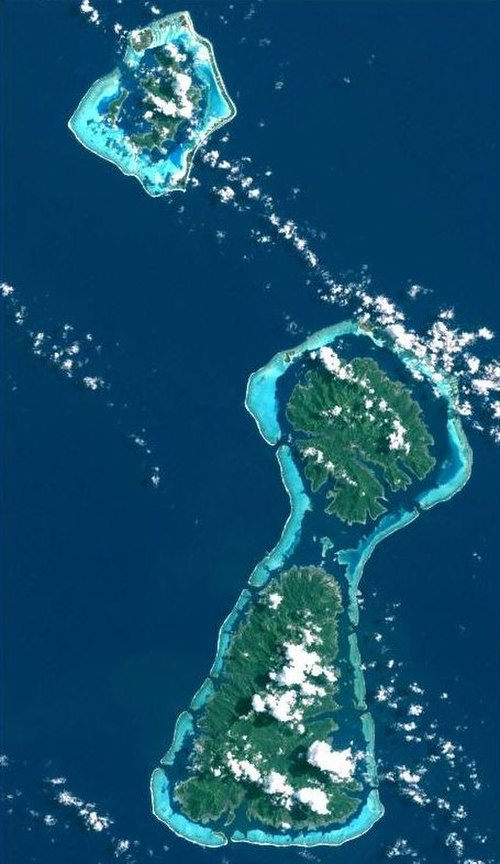
The islands of Bora Bora (top) Tahaa (middle) and Raiatea (bottom). Tahaa and Raiatea share the same lagoon.

Taputapuatea marae, an ancient marae mentioned in the traditions of Polynesian peoples, including, for example, the Māori of Aotearoa. This is where the Hawaiian voyaging canoe Hōkūle'a landed on its first voyage in 1976.

The Royal Family of Raiatea in the 1880s, when Raiatea became a French Protectorate. In the background, holding the flag, is Teraupo.

Aerial view of the island
Mai (Ra'iatean man)
Videos
Mai, also known as Omai in European countries, was a young Ra'iatean man who became the first Pacific Islander to visit Great Britain, and the second to visit European countries, after Ahutoru, who wa
Raʻiātea
…sailed with explorer James Cook, was born in Raiatea around 1725. Cook visited Raiatea in 1769 and again in 1773–1774. He named the island "Ulitea". Omai (c.1751–1780), another young man from Raiatea, travelled with European explorers to London in 1774 and also served as an interpreter to Captain Cook…
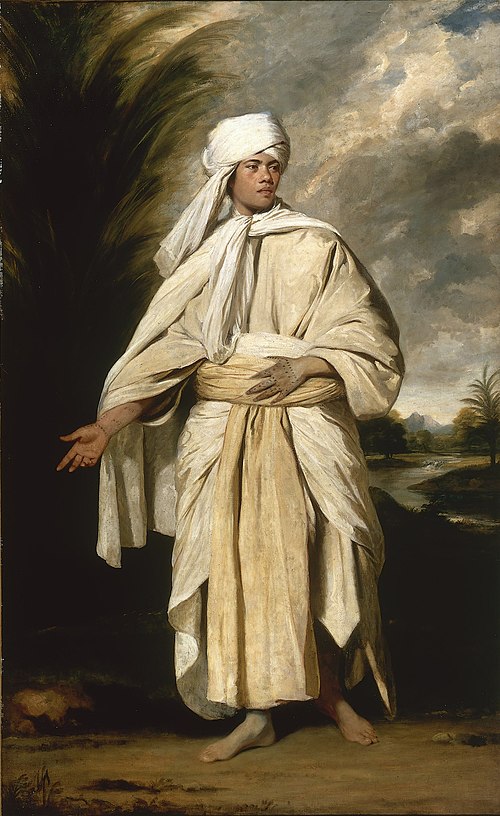
Portrait of Omai, a South Sea Islander who travelled to Great Britain with the second expedition of Captain Cook – Sir Joshua Reynolds, 1776
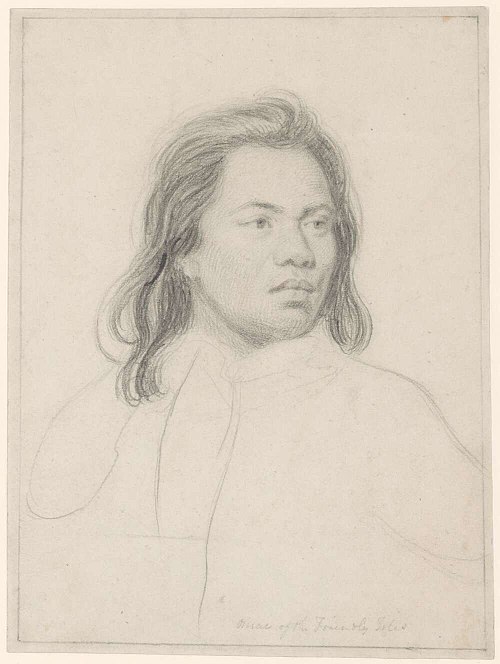
Omai of the Friendly Isles by Sir Joshua Reynolds, c.1774

William Parry's painting Sir Joseph Banks with Omai and Dr Daniel Solander, circa 1775–76