Racial segregation in the United States was the legally and/or socially enforced separation of black people from white people, as well as the de facto separation of other ethnic minorities from majori
Sign for "colored" waiting room at a Greyhound bus terminal in Rome, Georgia, 1943. Throughout the Southern United States there were Jim Crow laws creating de jure legally required segregation.


"We Cater to White Trade Only" sign on a restaurant window in Lancaster, Ohio, in 1938. Ohio, like most of the North and West, did not have de jure statutory enforced segregation (Jim Crow laws), but many places still had de facto social segregation in the early 20th century. Together with state sponsored segregation, such private owner enforced segregation was outlawed for public accommodations in the 1960s.

An African-American man drinking at a "colored" drinking fountain in a streetcar terminal in Oklahoma City, 1939 by Russell Lee
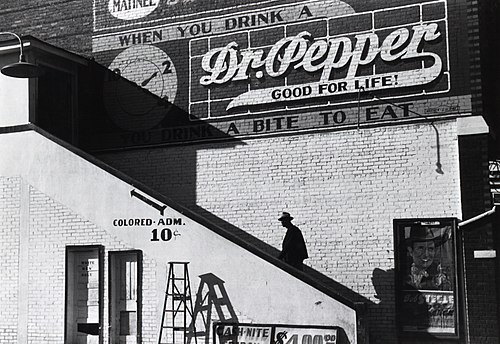
A black man goes into the "colored" entrance of a movie theater in Belzoni, Mississippi, 1939.
Jim Crow laws
Videos
The Jim Crow laws were state and local laws introduced in the Southern United States from the late 19th century to the mid-20th century that enforced racial segregation. The origin of the term Jim Cro
Racial segregation in the United States
…against racial segregation in several landmark cases including Heart of Atlanta Motel, Inc. v. United States (1964), which helped bring an end to the Jim Crow laws. Segregation was enforced across the U.S. for much of its history. Racial segregation follows two forms, de jure and de facto. De jure segregation…

c. 1832 illustration of Thomas D. Rice as Jim Crow, who the laws were named after

Freedmen voting in New Orleans in 1867

Sign for the "colored" waiting room at a bus station in Durham, North Carolina, May 1940

1904 caricature of "White" and "Jim Crow" rail cars by John T. McCutcheon. Despite Jim Crow's legal pretense that the races be "separate but equal" under the law, non-whites were given inferior facilities and treatment.