Ring a Ring o' Roses
Videos
"Ring a Ring o' Roses", also known as "Ring a Ring o' Rosie" or "Ring Around the Rosie", is a nursery rhyme, folk song, and playground game. Descriptions first appeared in the mid-19th century, though
The cover of L. Leslie Brooke's Ring O' Roses (1922) shows nursery rhyme characters performing the game


American children playing the game, illustrated by Jessie Willcox Smith in The Little Mother Goose (1912)

Kate Greenaway's illustration from Mother Goose or the Old Nursery Rhymes (1881)

Children's Dances by Hans Thoma, 1872
Great Plague of London
Videos
The Great Plague of London, lasting from 1665 to 1666, was the most recent major epidemic of the bubonic plague to occur in England. It happened within the centuries-long Second Pandemic, a period of
Ring a Ring o' Roses
…Pagan myth or folklore were proposed as origins at the end of the 19th century. In the mid-20th-century, it was suggested that the song reflects the Great Plague or earlier outbreaks of bubonic plague in England, with the plague's rash, protective posies of herbs, symptoms of sneezing, and finally falling down…

Collecting the dead for burial during the Great Plague

Rattus rattus, the black rat. Smaller than Rattus norvegicus, the brown rat, which later supplanted it, it is also keener to live near humankind. Timber houses and overcrowded slums provided excellent homes. The link between the rat as reservoir of infection and host to fleas which could transfer to man was not understood. Efforts were made to eliminate cats and dogs: if anything, this encouraged the rats. Body lice were also important plague vectors.
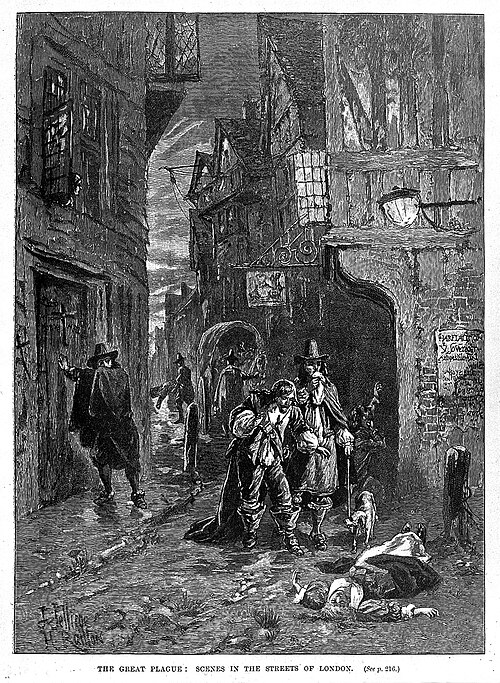
Two men discovering a dead woman in the street

Scenes in London during the plague