Rishabhanatha
Videos
Rishabhanatha, also Rishabhadeva, Rishabha or Ikshvaku, is the first tirthankara of Jainism. He was the first of twenty-four teachers in the present half-cycle of time in Jain cosmology and called a "

Birth of the Tirthankara Rishabha, folio from the Devasano Pado Kalpasutra, Kalpasutra and Kalakacharya Katha. Gujarat, c. 1500. Bharat Kala Bhavan

An idol of Rishabha with mother Marudevi at Palitana

Ruins of ancient Jain settlement from 2nd century BCE in Kankali Tila, Mathura depicting the scene of Nilanjana's Dance from life of Rishabhdeva.

Statuary representing meditation by Rishabhanatha in Kayotsarga posture. (Photo:Ajmer Jain temple)
Bahubali
Videos
Bahubali was the son of Rishabhanatha and the brother of the chakravartin Bharata. He is a revered figure in Jainism. He is said to have meditated motionless for 12 years in a standing posture, with c
Rishabhanatha
…Sunandā. Sumangalā is described as the mother of his ninety-nine sons (including Bharata) and one daughter, Brahmi. Sunandā is depicted as the mother of Bahubali and Sundari. The sudden death of Nilanjana, one of the dancers sent by Indra in his courtroom, reminded him of the world's transitory nature, and he…
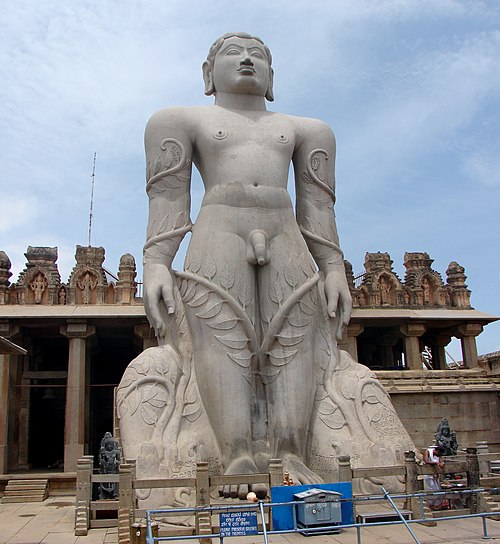
The 57-foot (17-m) high Gommateshwara statue at Shravanabelagola, was built in c. 983 CE

Depiction of Bharata-Bahubali fight
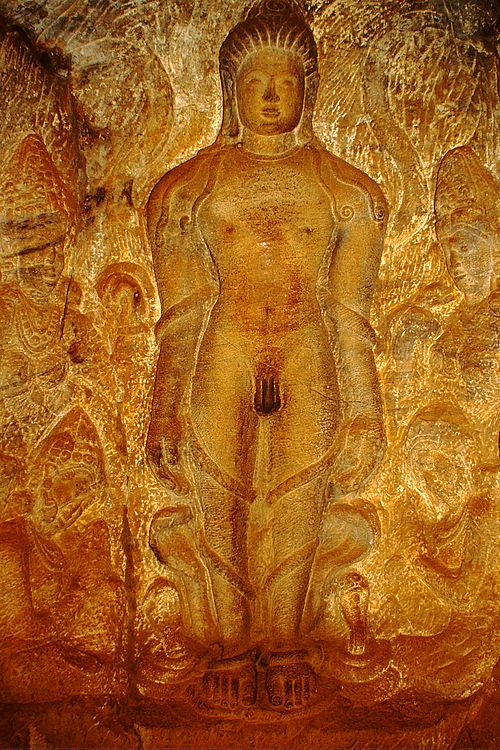
Sculpture depicting Bahubali's meditation in Kayotsarga posture with vines enveloped around his body (Photo: Badami caves)

Chalukyan-period copper-alloy image of Bahubali in the Metropolitan Museum of Art, New York.