Roman calendar
Videos
The Roman calendar was used by the Roman Kingdom and Roman Republic. Although the term is primarily used for Rome's pre-Julian calendars, it is often used inclusively of the Julian calendar establishe

A reproduction of the Fasti Antiates Maiores, a painted wall-calendar from the late Roman Republic

The remains of the Fasti Praenestini, containing the months of January, March, April, and December and a portion of February.

July through December sides of the twelve month Menologium Rusticum Colotianum

A fragment of the Fasti Praenestini for the month of April (Aprilis), showing its nundinal letters on the left side
Julian calendar
Videos
The Julian calendar is a solar calendar of 365 days in every year with an additional leap day every fourth year. The Julian calendar is still used as a religious calendar in parts of the Eastern Ortho
Roman calendar
…used by the Roman Kingdom and Roman Republic. Although the term is primarily used for Rome's pre-Julian calendars, it is often used inclusively of the Julian calendar established by Julius Caesar in 46 BC. According to most Roman accounts, their original calendar was established by their legendary first king Romulus…

The Tusculum portrait of Julius Caesar
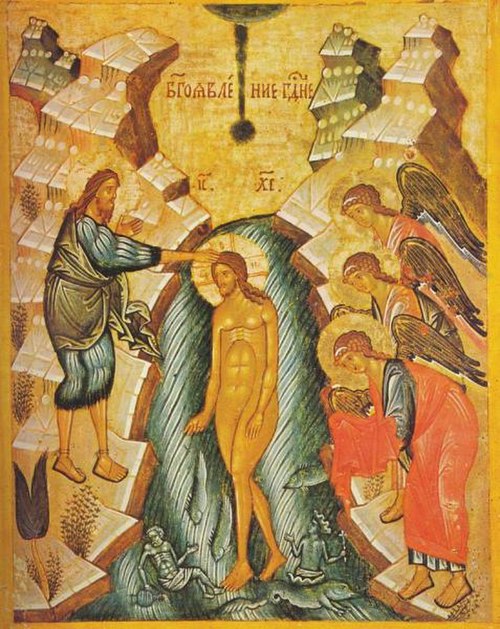
Russian icon of the Theophany (the baptism of Jesus by John the Baptist) (6 January), the highest-ranked feast which occurs on the fixed cycle of the Eastern Orthodox liturgical calendar

Marine sandglass MMM