Roman expansion in Italy
Videos
The Roman expansion in Italy covers a series of conflicts in which Rome grew from being a small Italian city-state to being the ruler of the Italian region. Roman tradition attributes to the Roman kin

The Capitoline Wolf sculpture in the Capitoline Museums. According to legend, Rome was founded in 753 BC by Romulus and Remus, who were raised by a she-wolf.

The Mars of Todi, a life-sized Etruscan bronze sculpture of a soldier making a votive offering, late 5th to early 5th century BC, kept in the Vatican Museums

Samnite infantry and cavalry, fresco from a tomb frieze in Nola, 4th century BC
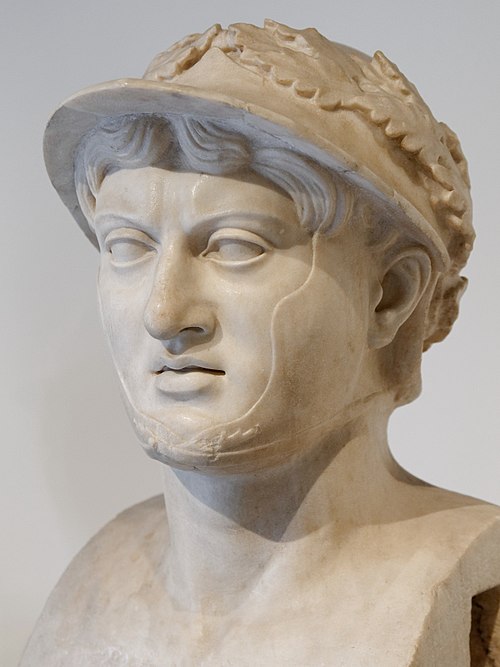
Bust of Pyrrhus of Epirus at the National Archaeological Museum of Naples
Roman–Etruscan Wars
Videos
The Roman–Etruscan Wars, also known as the Etruscan Wars or the Etruscan–Roman Wars, were a series of wars fought between ancient Rome and the Etruscans. Information about many of the wars is limited,
Roman expansion in Italy
…Hills and down to the coast of Latium. The birth of the Roman Republic after the overthrow of the Etruscan monarch of Rome in 509 BC began a series of major wars between the Romans and the Etruscans. In 390 BC, Gauls from the north of Italy sacked Rome. In the second half of the 4th century BC Rome clashed…

Giorces Veii Apollo 1