Rosalind Franklin
Videos
Rosalind Elsie Franklin was an English chemist and X-ray crystallographer. Her work was central to the understanding of the molecular structures of DNA, RNA, viruses, coal, and graphite. Although her
Franklin with a microscope in 1955


A satirical death note of A-DNA helix by Franklin and Gosling

An electron micrograph of tobacco mosaic virus

Blue plaque (now replaced) on The Eagle, Cambridge, with Franklin's name added at the bottom
Francis Crick
Videos
Francis Harry Compton Crick was an English molecular biologist, biophysicist, and neuroscientist. He, James Watson, Rosalind Franklin, and Maurice Wilkins played crucial roles in deciphering the helic
Rosalind Franklin
…at King's College London, particularly Photo 51, taken by her student Raymond Gosling, which led to the discovery of the DNA double helix for which Francis Crick, James Watson, and Maurice Wilkins shared the Nobel Prize in Physiology or Medicine in 1962. While Gosling actually took the famous Photo 51, Wilkins…
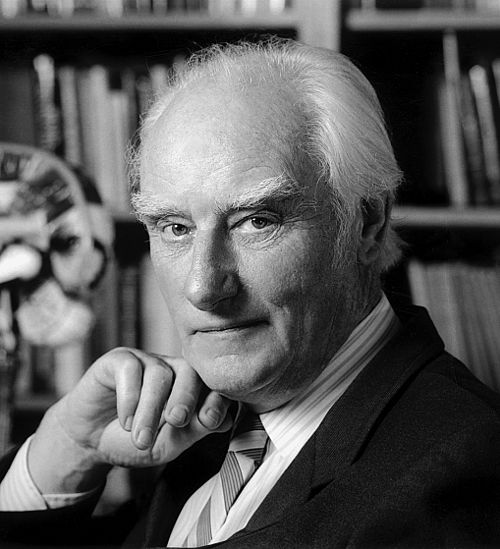
Francis Crick crop

Diagram that emphasises the phosphate backbone of DNA. Watson and Crick first made helical models with the phosphates at the centre of the helices.

Crick and Watson DNA model built in 1953 was reconstructed largely from its original pieces in 1973 and donated to the National Science Museum in London.

Results from an fMRI experiment in which people made a conscious decision about a visual stimulus. The small region of the brain coloured orange shows patterns of activity that correlate with the decision making process. Crick stressed the importance of finding new methods to probe human brain function.