Rosendale cement is a natural hydraulic cement that was produced in and around Rosendale, New York, beginning in 1825. From 1818 to 1970 natural cements were produced in over 70 locations in the United States and Canada. More than half of the 35 million tons of natural cement produced in the United States originated with cement rock mined in Ulster County, New York, in and around the Town of Rosendale in the Hudson River Valley. The Rosendale region of southeastern New York State is widely recognized as the source of the highest quality natural cement in North America. The Rosendale region was also coveted by geologists, such as W. W. Mather, a geologist working for the State of New York, for its unusual exposed bedrock. Because of its reputation, Rosendale cement was used as both a trade name and as a generic term referring to any natural hydraulic cement in the US. It was used in the construction of many of the United States' most important landmarks, including the Brooklyn Bridge, the pedestal of the Statue of Liberty, Federal Hall National Memorial, and the west wing of the United States Capitol building.

Lithograph of Rosendale cement production site in Ulster County, NY.
Seal of the New York and Rosendale Cement Company.
Rockefeller Center, National Historic Landmark Plaque
A cement is a binder, a chemical substance used for construction that sets, hardens, and adheres to other materials to bind them together. Cement is seldom used on its own, but rather to bind sand and gravel (aggregate) together. Cement mixed with fine aggregate produces mortar for masonry, or with sand and gravel, produces concrete. Concrete is the most widely used material in existence and is behind only water as the planet's most-consumed resource.
Cement powder, here conditioned[clarification needed] in bag, ready to be mixed with aggregates and water. Dispersing dry cement dust in the air should be avoided to prevent health issues.
Cement block construction examples from the Multiplex Manufacturing Company of Toledo, Ohio, in 1905
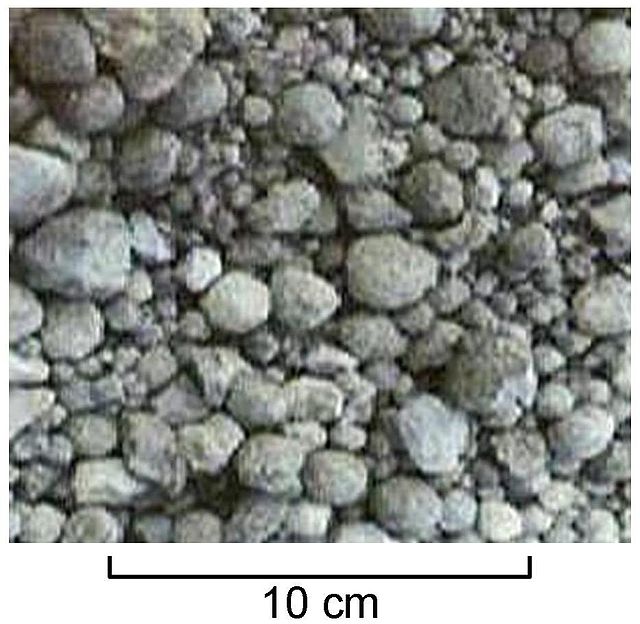
Clinker nodules produced by sintering at 1450 °C
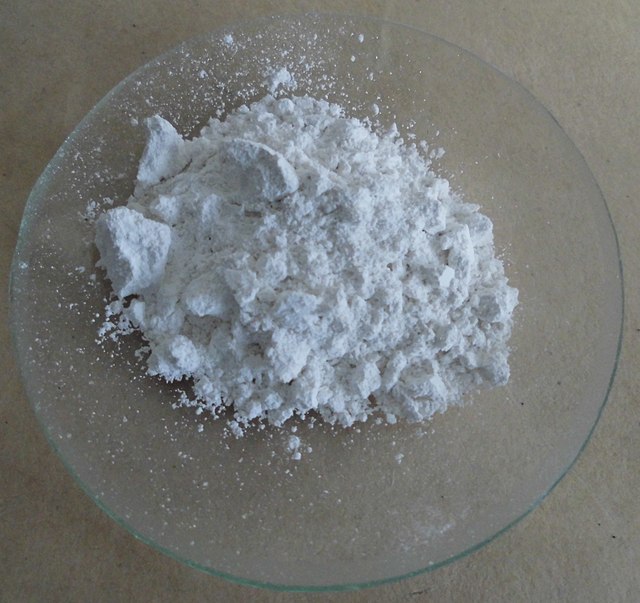
Calcium oxide obtained by thermal decomposition of calcium carbonate at high temperature (above 825 °C).


![Cement powder, here conditioned[clarification needed] in bag, ready to be mixed with aggregates and water. Dispersing dry cement dust in the air shoul](https://upload.wikimedia.org/wikipedia/commons/thumb/a/a4/USMC-110806-M-IX060-148.jpg/400px-USMC-110806-M-IX060-148.jpg)