Russian Empire
Videos
The Russian Empire was the final period of the Russian monarchy. It spanned most of northern Eurasia from its establishment in 1721 until the proclamation of the Russian Republic in 1917. At its heigh
Peter the Great officially proclaimed the Russian Empire in 1721 and became its first emperor. He instituted sweeping reforms and oversaw the transformation of Russia into a major European power. Painting by Jean-Marc Nattier, 1717.


The Victory at Poltava, painted by Alexander von Kotzebue in 1862

Empress Catherine the Great, who reigned from 1762 to 1796, continued the empire's expansion and modernization. Considering herself an enlightened absolutist, she played a key role in the Russian Enlightenment (painted in the 1780s).

1764, Ruble Catherine II ММД, Krasny Mint
Nicholas II
Videos
Nicholas II was Emperor of Russia from 1 November 1894 until his abdication in 1917. He was the last Russian monarch before the Russian Revolution and oversaw the Russian Empire's participation in Wor
Russian Empire
…Russia saw political radicalization and the growing popularity of revolutionary ideas such as communism. After the 1905 Revolution, the last emperor, Nicholas II (r. 1894–1917), authorized the creation of a national parliament, the State Duma, though ultimate political authority remained with him. When Russia…

Nicholas in 1912

Nicholas II in Nikolo Tikhonov Monastery 01
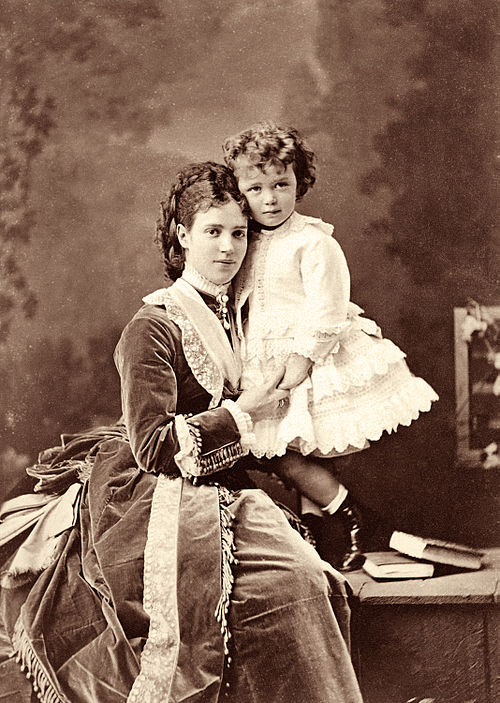
Nicholas with his mother, Maria Feodorovna, in 1870

Nicholas with his cousin, George V of the United Kingdom (right), wearing German military uniforms in Berlin before the war; 1913