SM-65 Atlas
Videos
The SM-65 Atlas was the first operational intercontinental ballistic missile developed by the United States and the first member of the Atlas rocket family. It was built for the U.S. Air Force by the
Atlas 2E missile, San Diego Aerospace Museum


Theodore von Kármán, left, is joined by Air Force and NASA officials while inspecting two of the models used in the high velocity, high altitude wind tunnels at Arnold Air Force Base. The missiles are AGARD-B and Atlas Series-B. (1959)

Atlas, test number 449, Air Force Missile Test Center.

Launch of an Atlas B ICBM.
Atlas (rocket family)
Videos
Atlas is a family of US missiles and space launch vehicles that originated with the SM-65 Atlas. The Atlas intercontinental ballistic missile program was initiated in the late 1950s by General Dynamic
SM-65 Atlas
…The SM-65 Atlas was the first operational intercontinental ballistic missile (ICBM) developed by the United States and the first member of the Atlas rocket family. It was built for the U.S. Air Force by the Convair Division of General Dynamics at an assembly plant located in Kearny Mesa, San Diego. The development…
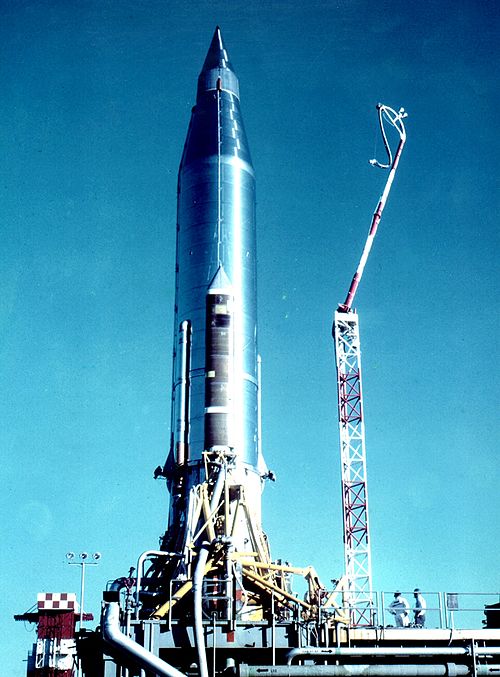
Atlas-B with SCORE payload, at LC-11, 1958

Mercury-Atlas 9 at Launch Complex 14

Launch of an Atlas V 401 carrying the LRO and LCROSS

Atlas Able