Salvator Mundi
Videos
Salvator Mundi, Latin for Saviour of the World, is a subject in iconography depicting Christ with his right hand raised in blessing and his left hand holding an orb, known as a globus cruciger. The la
Child Jesus Salvator Mundi (17th century), Portugal


Carlo Crivelli, Cristo benedicente (c. 1472), El Paso Museum of Art

Hans Memling, Earthly Vanity and Divine Salvation, detail (c. 1485). Musée des Beaux-Arts de Strasbourg (also bearing attributes of a Christ in Majesty, such as the crown)

Joos van Cleve, Christ as Salvator Mundi (c. 1516–1518), Louvre
Eschatology
Videos
Eschatology concerns expectations of the end of present age, human history, or the world itself. The end of the world or end times is predicted by several world religions, which teach that negative wo
Salvator Mundi
…holding an orb (frequently surmounted by a cross), known as a globus cruciger. The latter symbolizes the Earth, and the whole composition has strong eschatological undertones. The theme is associated with Early Netherlandish painting and the painters of the Northern Renaissance. However, an Italian painting using…

Four Horsemen of the Apocalypse, woodcut print from the Apocalypse of Albrecht Dürer (1497–1498)

The Antichrist, by Lucas Cranach the Elder (1521). Here the Antichrist is shown wearing the triple crown of the Roman papacy.
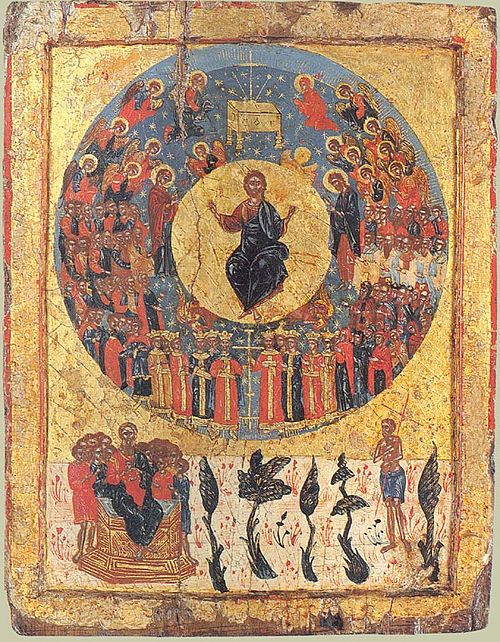
Icon of the Second Coming. Greek, c. 1700 A.D.
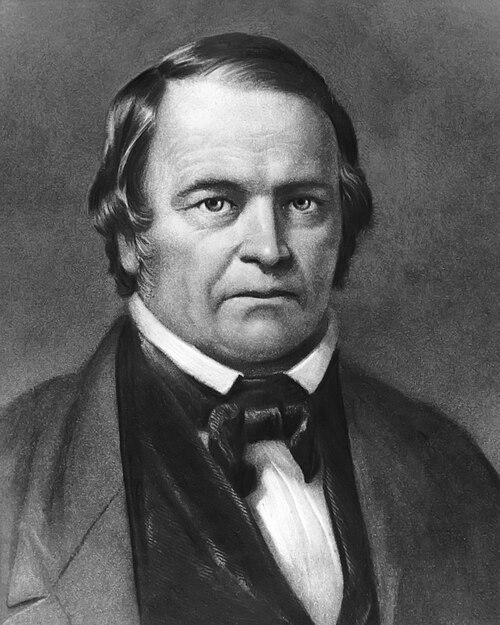
William Miller predicted the end of the world in 1843, known as the Great Disappointment.