Sample-return mission
Videos
A sample-return mission is a spacecraft mission to collect and return samples from an extraterrestrial location to Earth for analysis. Sample-return missions may bring back merely atoms and molecules

The Genesis Rock, returned by the Apollo 15 lunar mission in 1971.

The sample return capsule from NASA’s OSIRIS-REx mission shortly after touching down in the desert in Utah
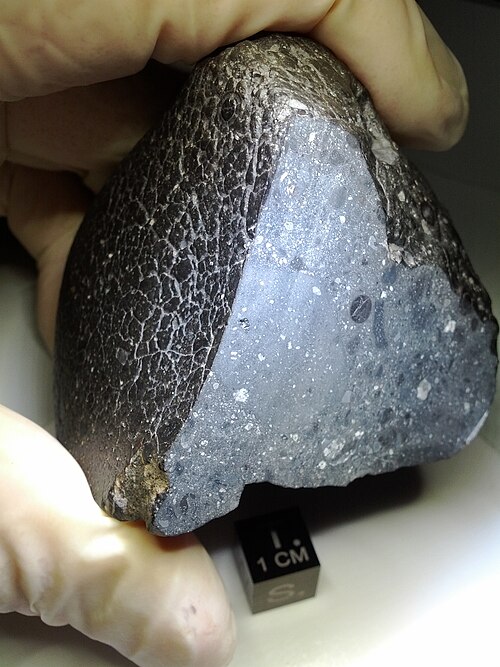
A meteorite thought to be from Mars

Apollo 11 was the first mission to return extraterrestrial samples.
OSIRIS-REx
Videos
OSIRIS-REx was a NASA asteroid-study and sample-return mission that visited and collected samples from 101955 Bennu, a carbonaceous near-Earth asteroid. The material, returned in September 2023, is ex
Sample-return mission
…It surveyed the asteroid for a year and a half and took samples. It left the asteroid in November 2019 and returned to Earth on 6 December 2020. The OSIRIS-REx mission was launched in September 2016 on a mission to return samples from the asteroid 101955 Bennu. The samples are expected to enable scientists to…

OSIRIS-REx in Launch Configuration

Artist's concept of TAGSAM instrument in operation

Two members of the recovery team examine the return capsule after landing.

Close-up photo of the return capsule upon landing