Samuel George Morton
Videos
Photos
Samuel George Morton was an American physician, natural scientist, and writer. As one of the early figures of scientific racism, he argued against monogenism, the single creation story of the Bible, instead supporting polygenism, a theory of multiple racial creations.

Engraving of Morton from the frontispiece to Types of Mankind by Nott and Gliddon

Figure 148 Types of Mankind P. 226. Coauthored by George Gliddon
Scientific racism
Videos
Photos
Scientific racism, sometimes termed biological racism, is the pseudoscientific belief that the human species can be subdivided into biologically distinct taxa called "races", and that empirical evidence exists to support or justify racism, racial inferiority, or racial superiority. Before the mid-20th century, scientific racism was accepted throughout the scientific community, but it is no longer considered scientific. The division of humankind into biologically separate groups, along with the assignment of particular physical and mental characteristics to these groups through constructing and applying corresponding explanatory models, is referred to as racialism, race realism, or race science by those who support these ideas. Modern scientific consensus rejects this view as being irreconcilable with modern genetic research.

Robert Boyle

Henry Home, Lord Kames

Homo monstrosus, or Patagonian giants, from Voyage au pole sud et dans l'Océanie (Voyage to the South Pole, and in Oceania), by Jules Dumont d'Urville
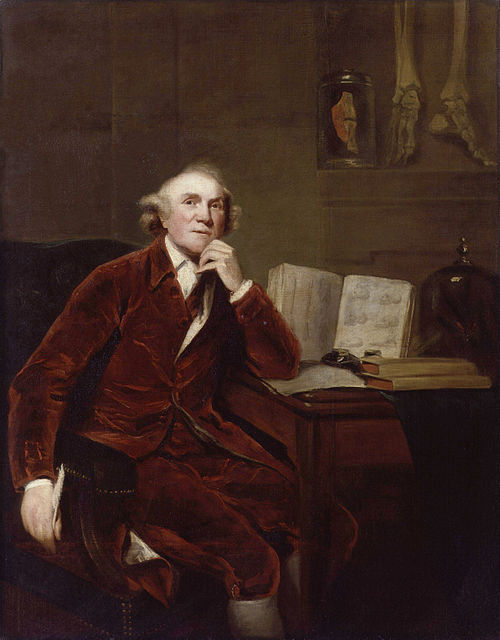
John Hunter. Painted by John Jackson in 1813, after an original by Sir Joshua Reynolds, who exhibited his painting at the Royal Academy in 1786.