Protests against Arctic drilling began in Seattle in 2015 in response to the news that the Port of Seattle authority made an agreement with Royal Dutch Shell to berth offshore drillships and semi-submersibles at the Port's Terminal 5 (T5) during the off-season of oil exploration in Alaskan waters of the Arctic. Hundreds of protesters took to Elliott Bay in kayaks, rafts, and other small boats, both as a demonstration and to interrupt docking of Shell's Polar Pioneer semi-submersible drilling vessel at Terminal 5. The waterborne demonstrators were dubbed kayaktivists by social and news media.

Shell Polar Pioneer semi-submersible offshore drilling rig at the Port of Seattle

Satirical sign at Jack Block Park by Seattle artist Jack Daws

Activists coordinated on social media with the hashtags #ShellNo and #paddleinseattle

Protesters in Bellingham
Bellingham, Washington
Videos
Bellingham is the county seat of Whatcom County in the U.S. state of Washington. It lies 21 miles (34 km) south of the U.S.–Canada border, between Vancouver, British Columbia, 52 miles (84 km) to the northwest and Seattle (90 miles to the south.
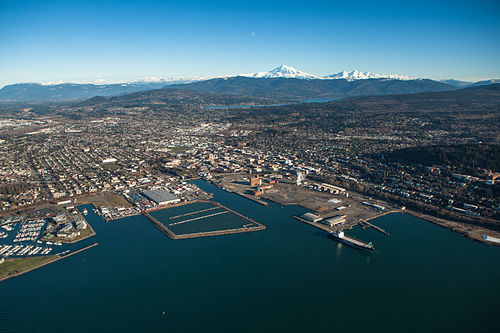
Aerial view of Bellingham

Boatbuilding at Pacific American Fisheries yard in Bellingham, 1916

An old bank building, built in 1900 in the Fairhaven Historic District

Bellingham circa 1909