Seljuk Empire
Videos
The Seljuk Empire, or the Great Seljuk Empire, was a high medieval, culturally Turco-Persian empire established and ruled by the Qïnïq branch of Oghuz Turks. The empire spanned a total area of 3.9 mil

Combat theme, Seljuk or post-Seljuk period. Possibly from Rayy. Iran, 12th-13th century. Seattle Art Museum.

Monumental Seljuk stucco panel (116 x 178cm), Saveh, Iran, 12th century.

Enthroned figure usually identified as the last Seljuk ruler Tughril III (1176–1194), from Rayy, Iran. Philadelphia Museum of Art.

Amir in Turkic military dress: long braids, sharbush fur hat, boots, close-fitting coat. Maqamat by Seljuk poet and dignitary Al-Hariri of Basra, 1237 copy.
Battle of Manzikert
Videos
The Battle of Manzikert or Malazgirt was fought between the Byzantine Empire and the Seljuk Empire on 26 August 1071 near Manzikert, Iberia. The decisive defeat of the Byzantine army and the capture o
Seljuk Empire
…Abbasid Caliphate and the Iranian Buyid Empire. The subsequent Seljuk expansion into eastern Anatolia triggered the Byzantine–Seljuk wars, with the Battle of Manzikert in 1071 marking a decisive turning point in the conflict in favour of the Seljuks, undermining the authority of the Byzantine Empire in the remaining…
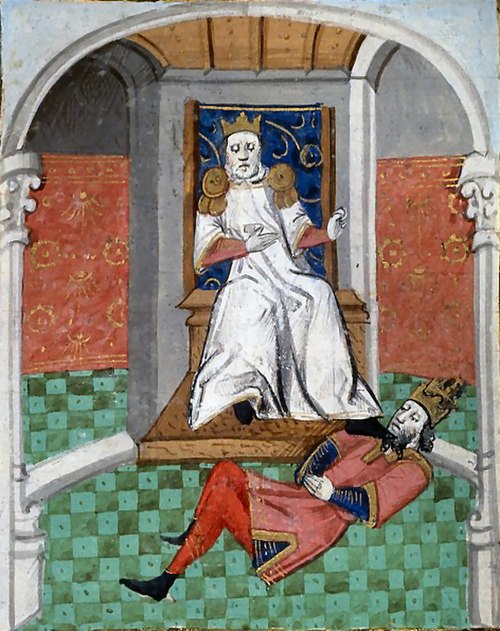
Alp Arslan humiliating Romanos IV. From a 15th-century illustrated French translation of Boccaccio's De casibus virorum illustrium.

Çamlıca Mosque, Istanbul