Shahnameh
Videos
The Shahnameh, also romanized Shahnama, is a long epic poem written by the Persian poet Ferdowsi between c. 977 and 1010 CE and is the national epic of Greater Iran. Consisting of some 50,000 distichs
Court of Keyumars, 16th century miniature by Sultan Muhammad from the Shahnameh of Shah Tahmasp, Aga Khan Museum


Plate with a hunting scene from the tale of Bahram Gur and Azadeh. The imagery on this plate represents the earliest known depiction of a well-known episode from the story of Bahram Gur, which seems to have been popular for centuries, but was only recorded in the Shahnameh, centuries after this plate was created. Iran, c. 5th century A.D. Metropolitan Museum of Art

'Rostam cycle', fragment of the Penjikent murals in the Hermitage Museum. 7-8th-century

Beaker (mina'i ware) illustrating the story of Bijan and Manijeh. Iran, late 12th century. Freer Gallery of Art
Epic poetry
Videos
In poetry, an epic is a lengthy narrative poem typically about the extraordinary deeds of extraordinary characters who, in dealings with gods or other superhuman forces, gave shape to the mortal unive
Shahnameh
…The Shahnameh, also romanized Shahnama (lit. 'Book of Kings'), is a long epic poem written by the Persian poet Ferdowsi between c. 977 and 1010 CE and is the national epic of Greater Iran. Consisting of some 50,000 distichs or couplets…
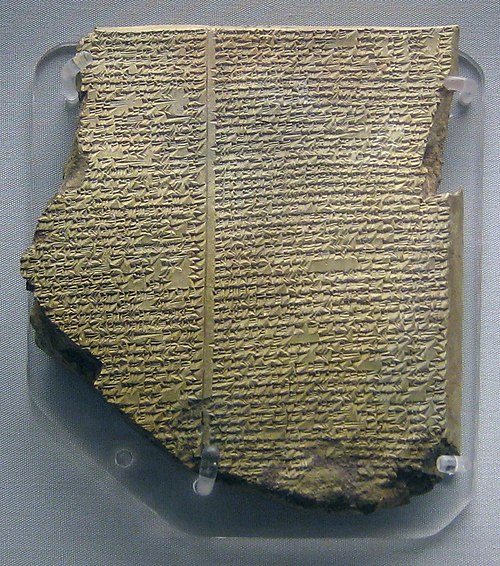
A tablet containing a fragment of the Epic of Gilgamesh

A traditional Kyrgyz manaschi performing part of the epic poem at a yurt camp in Karakol

The first edition (1835) of the Finnish national epic poem Kalevala by Elias Lönnrot