Shakkanakku
Videos
Photos
Shakkanakku, was an Akkadian-language title designating a military governor. Mari was ruled by a dynasty of hereditary Shakkanakkus which was originally set by the Akkadian Empire and gained independence following Akkad's collapse. It is considered that the Shakkanakkus gained some form of independence and came to be considered as "Kings" from the time of Apil-Kin. A critical analysis of the Shakkanakku List of Mari has been published.

Inscription "Iddi-Ilum, shakkanakku of Mari", using the Sumerian: 𒄊𒀴, šagina, on the Statue of Iddi-Ilum.

Statue of Ishtup-Ilum, Shakkanakku of Mari. (c.2150 BC)

Statue of Iddi-Ilum, Shakkanakku of Mari. (c. 2090 BC)

Puzur Ishtar, Shakkanakku of Mari. (c. 2050 BC)
Mari, Syria
Videos
Photos
Mari was an ancient Semitic city-state in modern-day Syria. Its remains form a tell 11 kilometers north-west of Abu Kamal on the Euphrates River western bank, some 120 kilometers southeast of Deir ez-Zor. It flourished as a trade center and hegemonic state between 2900 BC and 1759 BC. The city was built in the middle of the Euphrates trade routes between Sumer in the south and the Eblaite kingdom and the Levant in the west.

Ruins of Mari

The name of Mari (Cuneiform: 𒈠𒌷𒆠, ma-riki), on the statue of Iddi-Ilum, c. 2090 BC
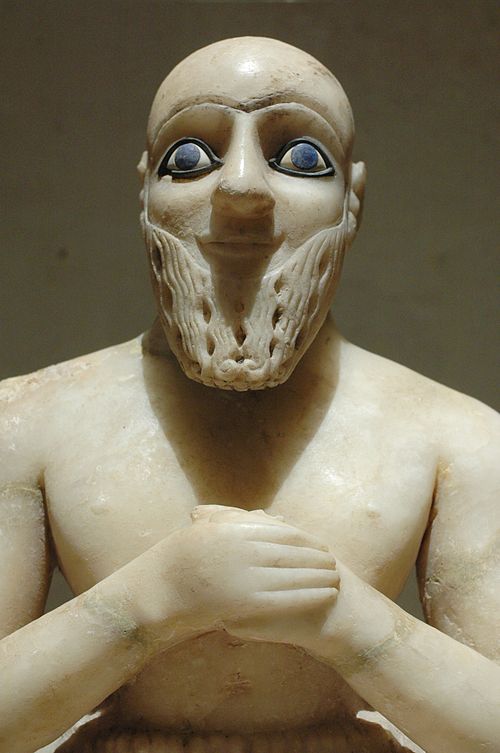
Statue of Ebih-Il, a superintendent in Mari. (25th century BC)

Helmetted warrior with axe, Mari