Shakya
Videos
Shakya was an ancient Indo-Aryan tribe of north-eastern South Asia whose existence is attested during the Iron Age. The Shakyas were organised into a gaṇasaṅgha, known as the Shakya Republic. The Shak
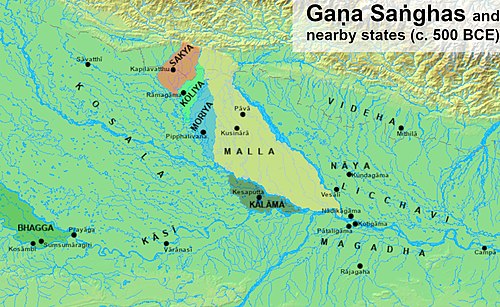
Shakya among the Gaṇasaṅghas

Siddhartha Gautama, called Shakyamuni "Sage of the Shakyas", the most famous Shakya. Seated bronze from Tibet, 11th century.

The words Budhe and Sakyamunī "Sage of the Shakyas" in Brahmi script, on Ashoka's Minor Pillar Edict of Lumbini (circa 250 BCE).

Bharhut inscription: Bhagavato Sakamunino Bodho "The illumination of the Blessed Sakamuni", circa 100 BCE.
Kapilavastu (ancient city)
Videos
Kapilavastu was an ancient city in the eastern Gangetic plains of the Indian subcontinent which was the capital of the clan gaṇasaṅgha or "republic" of the Shakyas in the late Iron Age, around the 6th
Shakya
…stretched into the Himalayas until the forested regions of the mountains, which formed their northern border. The capital of the Shakyas was the city of Kapilavastu. The name of the Shakyas is attested primarily in the Pali forms Sakya and Sakka, and the Sanskrit form Śākya…

Procession of king Suddhodana from Kapilavastu, proceeding to meet his son the Buddha walking in mid-air (head raised at the bottom of the panel), and to give him a Banyan tree (bottom left corner). The dream of Maya at the top of the panel is a sure marker of Kapilavastu. Sanchi.

Proposed site of Suddhodanda's Palace at Tilaurakot

Stupa at Piprahwa

Maya's dream of an elephant during her conception of the Buddha, an identifier of the city of Kapilavastu.