Siege of Damascus (634)
Videos
The siege of Damascus lasted from 21 August to 19 September 634 before the city fell to the Rashidun Caliphate. Damascus was the first major city of the Eastern Roman Empire to fall in the Muslim conq

Kisan Gate, one of the six ancient gates of Damascus.

Wall of Damascus at the Thomas gate. Although now only 7 metres (23 feet) high, it was 11 m (36 ft) high at the time of the siege. Damascus has risen 4 m (13 ft) since then.

Remains of the Eastern gate. Khalid's troops entered Damascus through this gate.
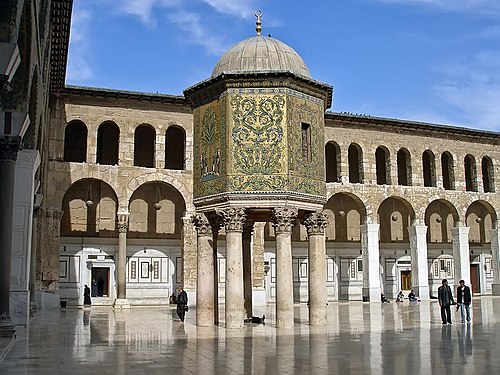
The dome of Damascus' treasury in the Umayyad Mosque
Abu Ubayda ibn al-Jarrah
Videos
Abū ʿUbayda ibn al-Jarrāḥ, was a Muslim commander and one of the Companions of the Prophet. He is mostly known for being one of the ten to whom Paradise was promised. He was commander of a large secti
Siege of Damascus (634)
…entered the city by assault from the Eastern gate, Thomas, commander of the Byzantine garrison, negotiated a peaceful surrender at the Jabiyah gate with Abu Ubaidah, Khalid's second in command. After the surrender of the city, the commanders disputed the terms of the peace agreement. The commanders finally agreed…

Battle against the Byzantines for Aleppo in 637. Rawdat al-safa (Garden of felicity) by Mirkhwand (d. 1498), Shiraz, 1571-72 (Arthur M. Sackler Collection, S1986.241).
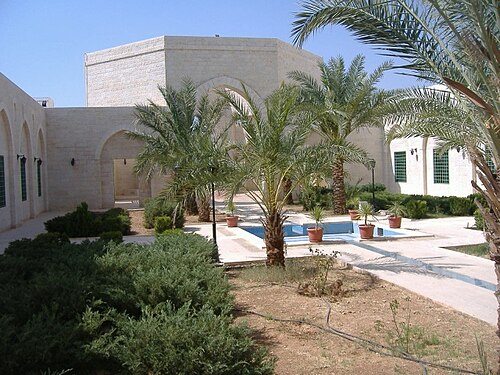
Courtyard of the Mausoleum of Abu Ubaydah in Jordan