Silenus
Videos
In Greek mythology, Silenus was a companion and tutor to the wine god Dionysus. He is typically older than the satyrs of the Dionysian retinue, and sometimes considerably older, in which case he may b
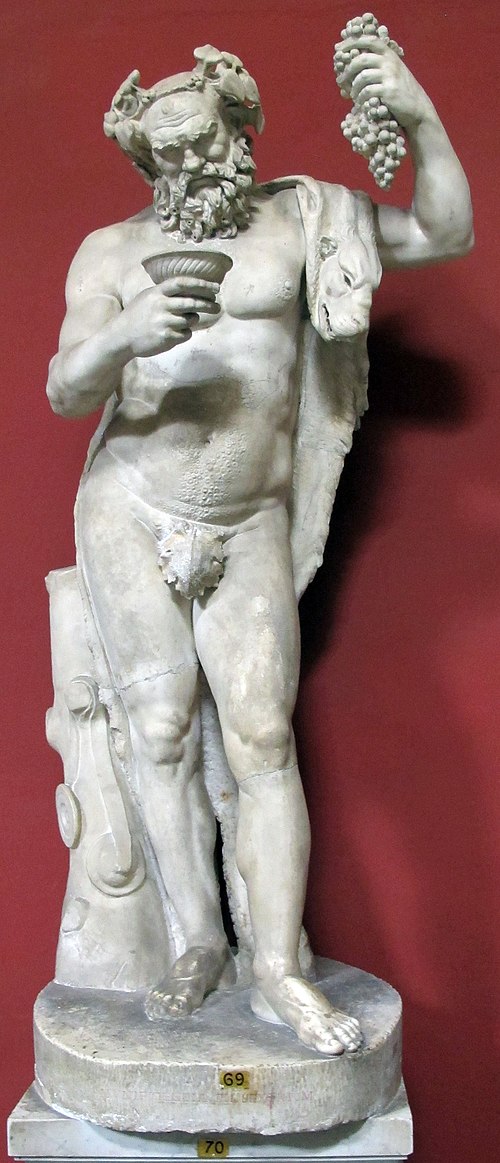
Roman copy of Hellenistic statue of Silenus holding a bunch of grapes and a cup of wine, Vatican Museums (Pius-Clementine Museum, Room of the Muses), Rome

Front side of a Roman sarcophagus, depicting the wedding of Dionysos and Ariadne, with old Silenus figuring in their entourage (sixth figure from the right), 150–160 CE (Glyptothek, Munich)

Papposilenus in a Dionysian procession, bell-krater from Paestum, Magna Graecia, c. 355 BC (Metropolitan Museum of Art)

Satyr holding a thyrsus, supporting a drunken ivy-wreathed silenus, from the Borghese Vase, 1st century BC (Louvre)
Pan (god)
Videos
In ancient Greek religion and mythology, Pan is the god of the wild, shepherds and flocks, rustic music and impromptus, and companion of the nymphs. He has the hindquarters, legs, and horns of a goat,
Silenus
…Museums (Pius-Clementine Museum, Room of the Muses), Rome Abode Nysa Symbol Wine, grapes, kantharos, thyrsos, wineskin, panther, donkey Genealogy Parents Pan, or Hermes and Gaea Consort Hermaphroditus Children foster father of Dionysus, Pholus In Greek mythology, Silenus (; Ancient Greek: Σιληνός Sīlēnós or…

Pan teaching his eromenos, the shepherd Daphnis, to play his pan flute, Roman copy of Greek original c. 100 BC, found in Pompeii.

Ancient Roman fresco of Pan and Hermaphroditus from the House of Dioscuri in Pompeii, now in the National Archaeological Museum, Naples

Pan illustrated in the Flemish magazine Regenboog. Draft for the woodcut Pan of Jozef Cantré. Published in 1918.

Mask of the god Pan, detail from a bronze stamnoid situla, 340–320 BC, part of the Vassil Bojkov Collection, Sofia, Bulgaria