Simo Häyhä
Videos
Simo Häyhä, often referred to by his nickname The White Death, was a Finnish military sniper during the Winter War between Finland and the Soviet Union in World War II. He used a Finnish-produced M/28
Häyhä after being awarded the honorary rifle, model 28, on 17 February 1940


Häyhä in his Civil Guard uniform, c. 1922

Häyhä in Kollaa on 17 February 1940, right after being awarded the honorary rifle.

The Kollaa and Simo Häyhä Museum [fi] in Miettilä, Rautjärvi, Finland
Mosin–Nagant
Videos
The Mosin–Nagant is a five-shot, bolt-action, internal magazine–fed military rifle. Known officially as the 3-line rifle M1891, in Russia and the former Soviet Union as Mosin's rifle and informally ju
Simo Häyhä
…The White Death, was a Finnish military sniper during the Winter War between Finland and the Soviet Union in World War II. He used a Finnish-produced M/28-30 rifle (a variant of the Mosin–Nagant) and a Suomi KP/-31 submachine gun. Häyhä is believed to have killed more than 500 enemy soldiers during the…
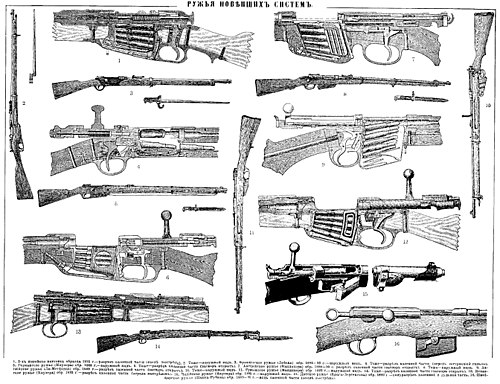
Schematic of Model 1891 (top left)

Russian Imperial infantry of World War I armed with Mosin–Nagant rifles

Arkhangelsk, Russia, November 20, 1918. The US 339th Infantry Regiment, equipped with Mosin-Nagant rifles, is inspected by British General Edmund Ironside, commander of the North Russia intervention Force.

A book published by the Japanese Army Magazine in 1938, quoted a Soviet Red Army military adviser's conversation, talking about the Mosin-Nagant sniper rifles (with a PE or PEM scope), which were used by the Chinese military in the Battle of Shanghai (1937), caused great losses to the Japanese army.