Sin (mythology)
Videos
Sin or Suen also known as Nanna is the Mesopotamian god representing the moon. While these two names originate in two different languages, respectively Akkadian and Sumerian, they were already used in

Impression of the cylinder seal of Ḫašḫamer, ensi (governor) of Iškun-Sin c. 2100 BCE. The seated figure is probably king Ur-Nammu, bestowing the governorship on Ḫašḫamer, who is led before him by Lamma (protective goddess). Sin himself is indicated in the form of a crescent.

Symbols representing Sin (center), Ishtar (left) and Shamash (right), as depicted on the upper half of a kudurru of Meli-Shipak II.

A relief of Kušuḫ (right), the Hurrian moon god, from Yazılıkaya

A relief depicting the offering of a libation to the Anatolian moon god Arma (right).
Inanna
Videos
Inanna is the ancient Mesopotamian goddess of war, love, and sex. She is also associated with political power, divine law, sensuality, and procreation. Originally worshipped in Sumer, she was known by
Sin (mythology)
…serves as a representation of him. He was also associated with boats. The goddess Ningal was regarded as Sin's wife. Their best attested children are Inanna (Ishtar) and Utu (Shamash), though other deities, for example Ningublaga or Numushda, could be regarded as members of their family too. Sin was also…
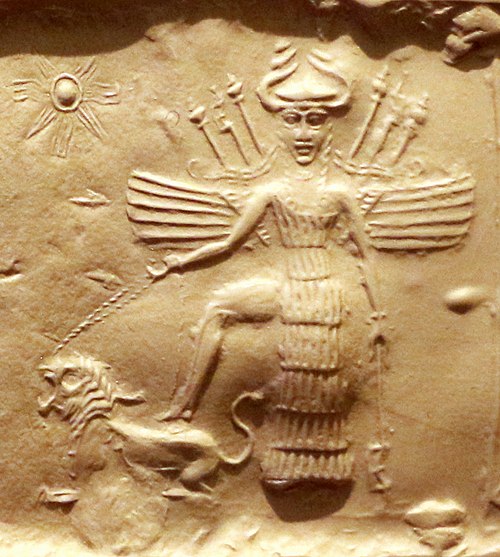
Goddess Ishtar on an Akkadian seal, 2350–2150 BCE. She is equipped with weapons on her back, has a horned helmet, places her foot in a dominant posture upon a lion secured by a leash and is accompanied by the star of Shamash.
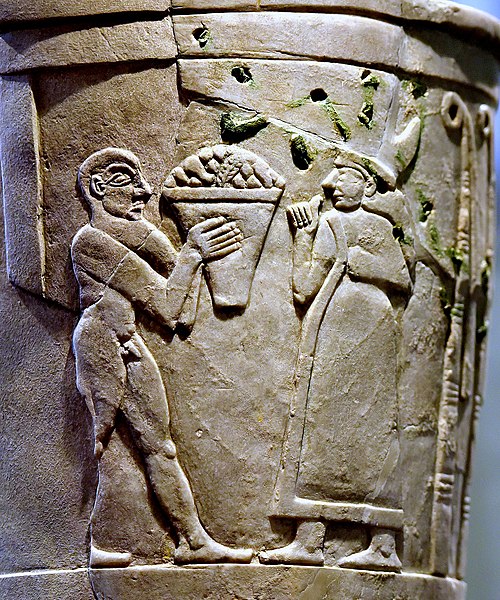
Inanna receiving offerings on the Uruk Vase, circa 3200–3000 BCE
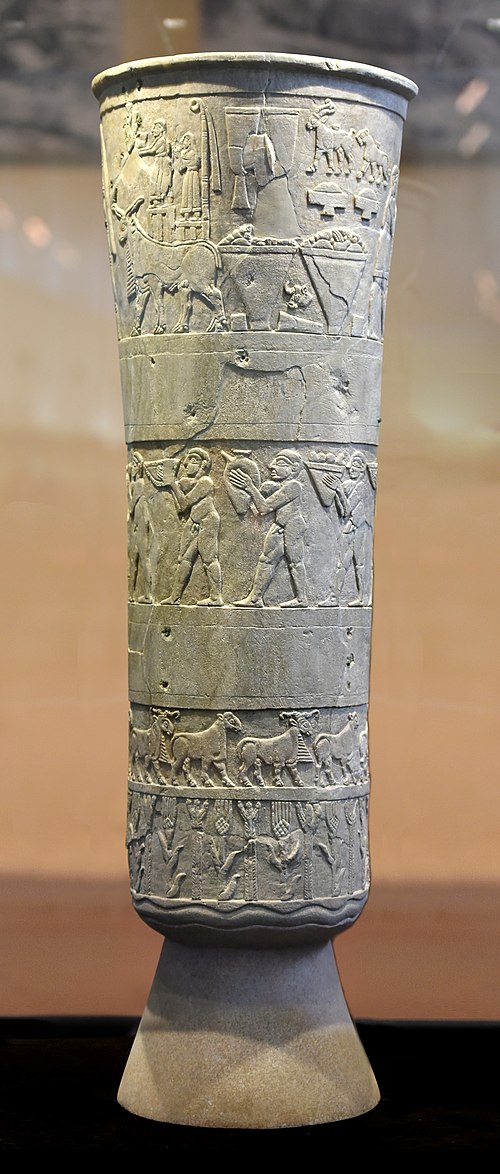
The Uruk Vase (Warka Vase), depicting votive offerings to Inanna (3200–3000 BCE)

Tablet of Lugal-kisalsi. The symbol for Inanna is in the 2nd column from the right.