Sir Gawain and the Green Knight is a Middle English late 14th-century chivalric romance in alliterative verse. The author is unknown; the title was given centuries later. It is one of the best-known A
First page of the only surviving manuscript, c. 14th century

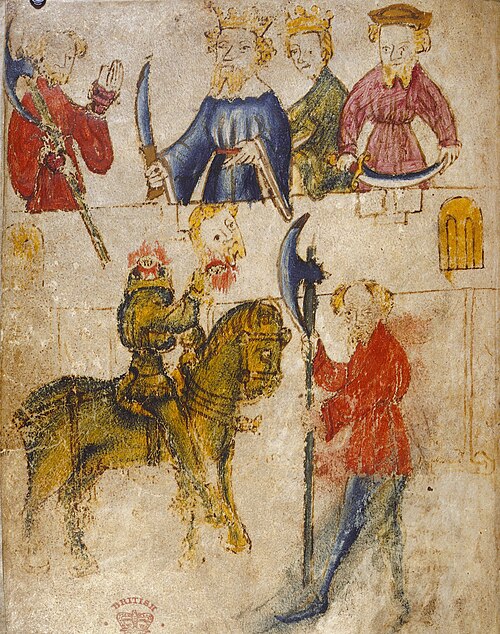
Sir Gawain and the Green Knight (from original manuscript, artist unknown)

The Shrine of St Erkenwald: the Saxon prince, bishop and saint is thought by some to have inspired the poet who wrote Sir Gawain and the Green Knight to write another eponymous poem.

The legendary Irish figure Cúchulainn faced a trial similar to Gawain's (Cúchulain Slays the Hound of Culain by Stephen Reid, 1904).
Green Knight
Videos
The Green Knight is a heroic character of the Matter of Britain, originating in the 14th-century poem Sir Gawain and the Green Knight and the related medieval work The Greene Knight. His true name is
Sir Gawain and the Green Knight
…Simon Armitage, and others, as well as through film and stage adaptations. The story describes how Sir Gawain accepts a challenge from a mysterious "Green Knight" who dares any man to strike him with his axe if he will take a return blow in a year and a day. Gawain accepts and beheads him, after which the Green…
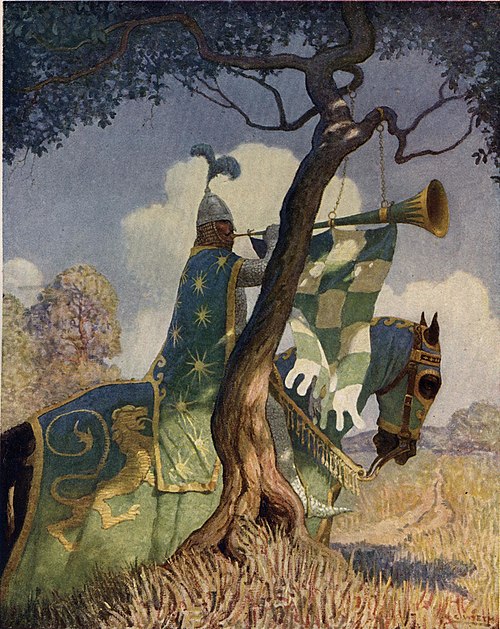
The Green Knight preparing to battle Sir Beaumains in N. C. Wyeth's illustration for Sidney Lanier's The Boy's King Arthur: Sir Thomas Malory's History of King Arthur and His Knights of the Round Table (1922)

Michael Pacher's painting of a green Devil with Saint Augustine in 1475. Poetic contemporaries such as Chaucer also made associations between the colour green and the devil, causing scholars to make similar associations in readings of the Green Knight.