Siren (mythology)
Videos
In Greek mythology, sirens are female humanlike beings with alluring voices; they appear in a scene in the Odyssey in which Odysseus saves his crew's lives. Roman poets place them on some small island
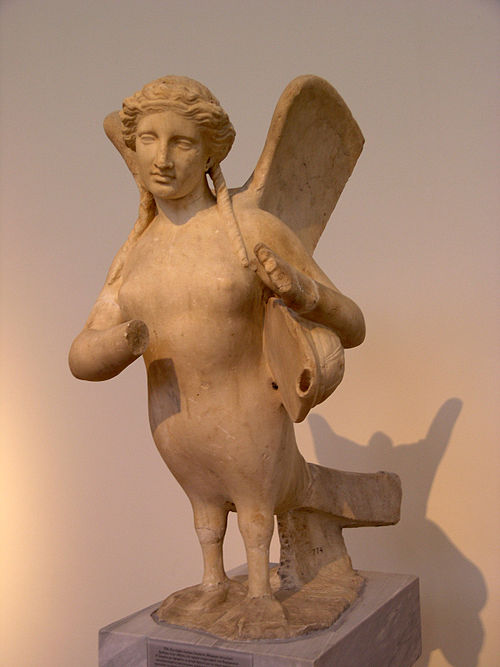
Attic funerary statue of a siren, playing on a tortoiseshell lyre, c. 370 BC

Archaic perfume vase in the shape of a siren, c. 540 BC

Moaning siren statuette from Myrina, first century BC
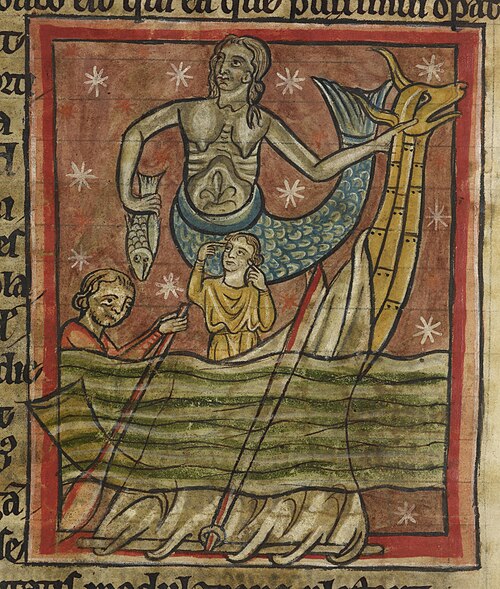
Miniature illustration of a siren enticing sailors who try to resist her, from an English Bestiary, c. 1235
Odyssey
Videos
The Odyssey is one of two major epics of ancient Greek literature attributed to Homer. It is one of the oldest surviving works of literature and remains popular with modern audiences. Like the Iliad,
Siren (mythology)
…Ancient Greek: singular: Σειρήν, Seirḗn; plural: Σειρῆνες, Seirênes) are female humanlike beings with alluring voices; they appear in a scene in the Odyssey in which Odysseus saves his crew's lives. Roman poets place them on some small islands called Sirenum Scopuli. In some later, rationalized traditions…

Oldest-known manuscript fragment of the Odyssey, produced in Ptolemaic Egypt during the 3rd century BC and unearthed in Medinet Ghoram

Terracotta plaque of the Mesopotamian ogre Humbaba, believed to be a possible inspiration for the figure of Polyphemus

A mosaic depicting Odysseus, from the villa of La Olmeda, Pedrosa de la Vega, Spain, late 4th–5th centuries AD

Odysseus and his soldiers fighting the Cicones —allies of the Trojans— during the sacking of their city. After seizing goods and women, Odysseus is driven back by allies of the Cicones.