Siyer-i Nebi
Videos
Photos
Siyer-i Nebi is an Ottoman epic on the life of the Islamic prophet Muhammad, completed around 1388, written by Mustafa, a Mevlevi dervish on the commission of Sultan Barquq, the Mamluk ruler in Cairo. The text is based on the 13th-century writings of Abu’l Hasan al-Bakri and Ibn Hisham. This epic would later be illustrated by Mustafa ibn Vali in the late 16th century, as commissioned by his patron, Sultan Murad III.
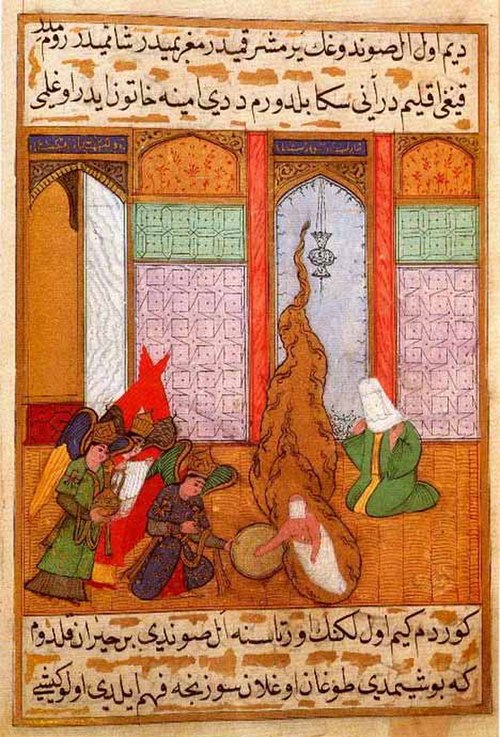
The birth of Muhammad in the Siyer-i-Nebi

Muhammad at the Kaaba
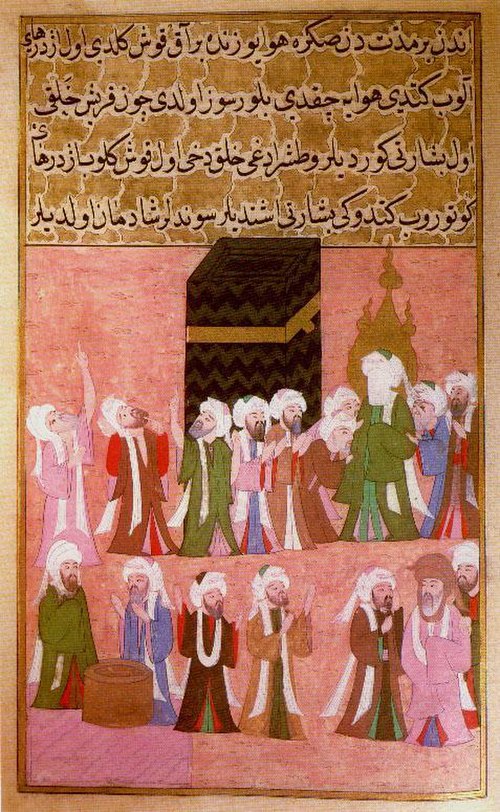
Muhammad removes a dragon from the Kaaba

Muhammad at Mount Hira
Murad III
Videos
Photos
Murad III was the sultan of the Ottoman Empire from 1574 until his death in 1595. His rule saw battles with the Habsburgs and exhausting wars with the Safavids. The long-independent Morocco was for a time made a vassal of the empire but regained independence in 1582. His reign also saw the empire's expanding influence on the eastern coast of Africa. However, the empire was beset by increasing corruption and inflation from the New World which led to unrest among the Janissary and commoners. Relations with Elizabethan England were cemented during his reign as both had a common enemy in the Spanish. He was also a great patron of the arts, commissioning the Siyer-i-Nebi and other illustrated manuscripts.
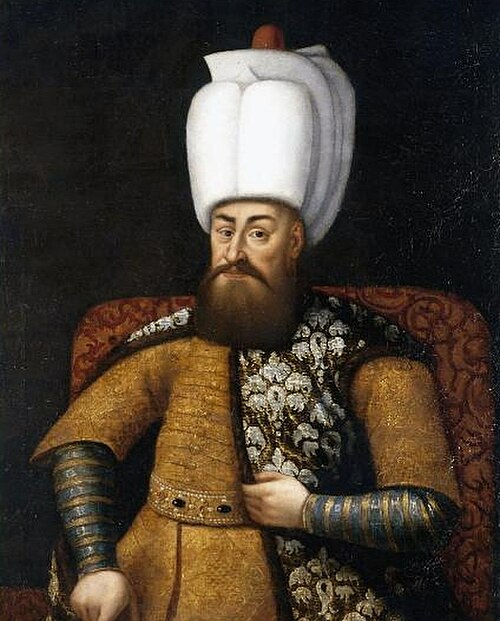
Life-size portrait, attributed to a Spanish artist, 17th century

Miniature painting of a parade of two riding Gazi (veterans from Rumelia) in front of Sultan Murat III (from the Surname-i hümayun, 16th century)