Socrates
Videos
Socrates was an ancient Greek philosopher from Classical Athens, perhaps the first Western moral philosopher, and a major inspiration on his student Plato, who largely founded the tradition of Western
A marble head of Socrates in the Louvre (copy of a lost bronze head by Lysippus)


Battle of Potidaea (432 BC): Athenians against Corinthians (detail). Scene of Socrates (center) saving Alcibiades. 18th century engraving. According to Plato, Socrates participated in the Battle of Potidaea, the retreat of Battle of Delium and the battle of Amphipolis (422 BC).

The Death of Socrates, by Jacques-Louis David (1787). Socrates was visited by friends in his last night in prison. His discussion with them gave rise to Plato's Crito and Phaedo.

The Debate of Socrates and Aspasia by Nicolas-André Monsiau. Socrates's discussions were not limited to a small elite group; he engaged in dialogues with foreigners and with people from all social classes and of all genders.
Plato
Videos
Plato was an ancient Greek philosopher of Classical Athens who is most commonly considered the foundational thinker of the Western philosophical tradition. An innovator of the literary dialogue and di
Socrates
…399 BC) was an ancient Greek philosopher from Classical Athens, perhaps the first Western moral philosopher, and a major inspiration on his student Plato, who largely founded the tradition of Western philosophy. An enigmatic figure, Socrates authored no texts and is known mainly through the posthumous…

Heraclitus (1628) by Hendrick ter Brugghen. Heraclitus saw a world in flux, with everything always in conflict, constantly changing.

Bust of Parmenides from Velia. Parmenides saw the world as eternal and unchanging, that all change was an illusion.
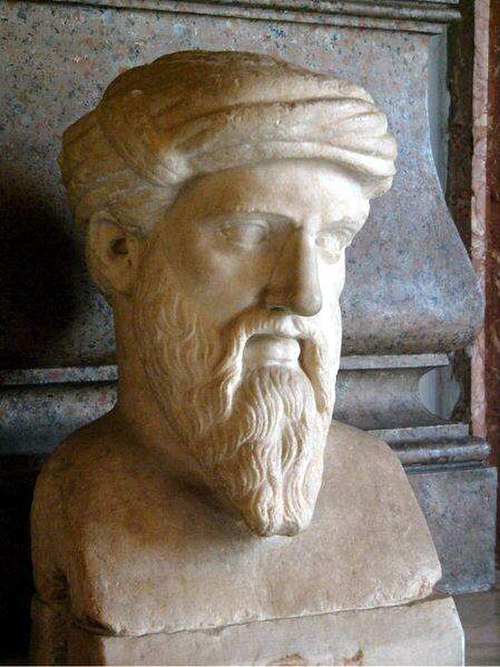
The mathematical and mystical teachings of the followers of Pythagoras, pictured above, exerted a strong influence on Plato.