Sonata
Videos
Sonata, in music, literally means a piece played as opposed to a cantata, a piece sung. The term evolved through the history of music, designating a variety of forms until the Classical era, when it took on increasing importance. Sonata is a vague term, with varying meanings depending on the context and time period. By the early 19th century, it came to represent a principle of composing large-scale works. It was applied to most instrumental genres and regarded—alongside the fugue—as one of two fundamental methods of organizing, interpreting and analyzing concert music. Though the musical style of sonatas has changed since the Classical era, most 20th- and 21st-century sonatas still maintain the same structure.


Individual sheet music of a sonata, written in the Baroque period.
Baroque music
Videos
Baroque music refers to the period or dominant style of Western classical music composed from about 1600 to 1750. The Baroque style followed the Renaissance period, and was followed in turn by the Classical period after a short transition. The Baroque period is divided into three major phases: early, middle, and late. Overlapping in time, they are conventionally dated from 1580 to 1650, from 1630 to 1700, and from 1680 to 1750. Baroque music forms a major portion of the "classical music" canon, and is widely studied, performed, and listened to. The term "baroque" comes from the Portuguese word barroco, meaning "misshapen pearl". The works of George Frideric Handel and Johann Sebastian Bach are considered the pinnacle of the Baroque period. Other key composers of the Baroque era include Claudio Monteverdi, Domenico Scarlatti, Alessandro Scarlatti, Alessandro Stradella, Tomaso Albinoni, Johann Pachelbel, Henry Purcell, Antonio Vivaldi, Georg Philipp Telemann, Jean-Baptiste Lully, Jean-Philippe Rameau, Marc-Antoine Charpentier, Arcangelo Corelli, François Couperin, Johann Hermann Schein, Heinrich Schütz, Samuel Scheidt, Dieterich Buxtehude, Gaspar Sanz, José de Nebra, Antonio Soler, Carlos Seixas and others.

Painting by Evaristo Baschenis of Baroque instruments, including a cittern, viola da gamba, violin, and two lutes
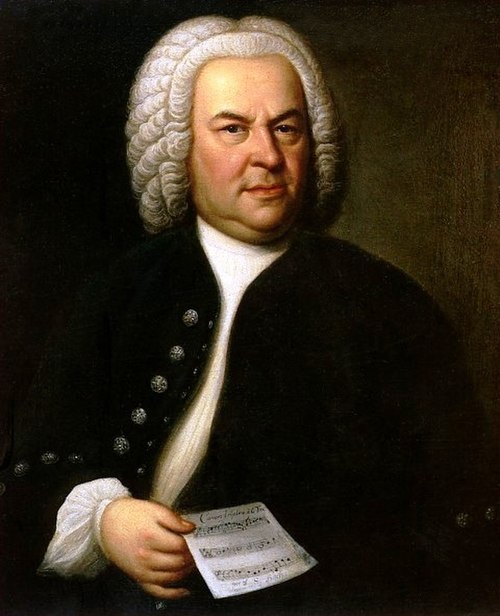
Johann Sebastian Bach, 1748
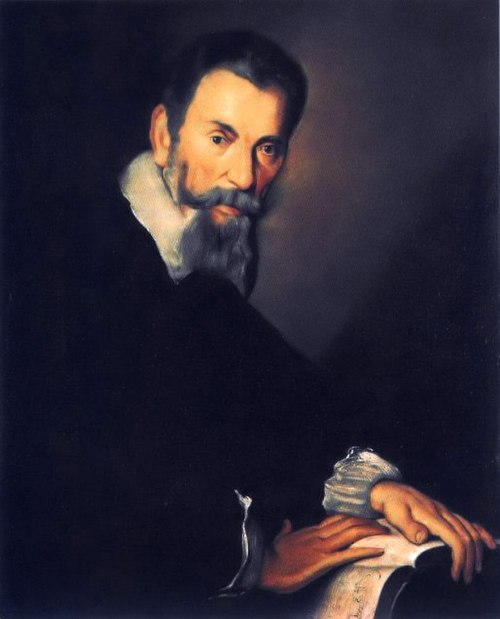
Claudio Monteverdi in 1640
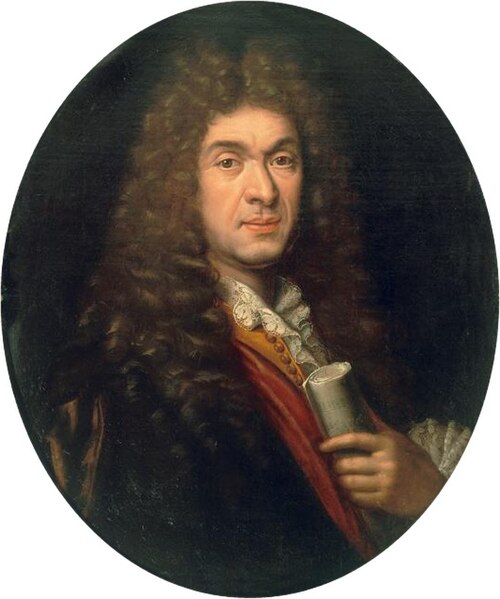
Jean-Baptiste Lully by Paul Mignard