Sophronius, called Sophronius the Sophist, was the Patriarch of Jerusalem from 634 until his death. He is venerated as a saint in the Eastern Orthodox and Catholic Churches. Before rising to the primacy of the see of Jerusalem, he was a monk and theologian who was the chief protagonist for orthodox teaching in the doctrinal controversy on the essential nature of Jesus and his volitional acts. He is also renowned for negotiation of surrender of Jerusalem to the Muslim caliph Umar ibn al-Khattab.
Saint Sophronius of Jerusalem
Greek Orthodox Patriarchate of Jerusalem
The Greek Orthodox Patriarchate of Jerusalem, also known as the Greek Orthodox Church of Jerusalem, is an autocephalous church within the wider communion of Eastern Orthodox Christianity. Established in the mid-fifth century as one of the oldest patriarchates in Christendom, it is headquartered in the Church of the Holy Sepulchre in Jerusalem and led by the patriarch of Jerusalem, currently Theophilos III. The patriarchate's ecclesiastical jurisdiction includes roughly 200,000 to 500,000 Orthodox Christians across the Holy Land in Palestine, Jordan and Israel.
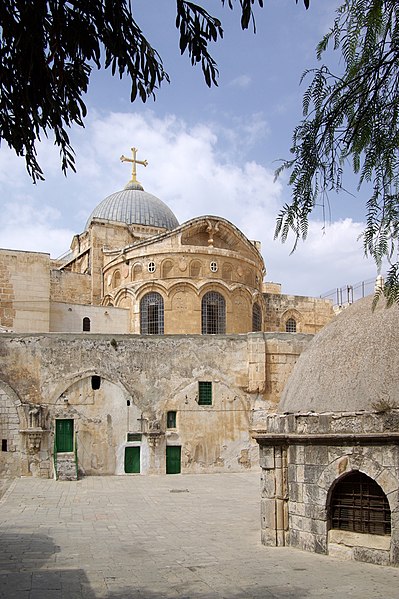
View of the Holy Sepulchre, East Jerusalem
James, brother of Jesus, first Bishop of Jerusalem
Priest of the Brotherhood of the Holy Sepulchre in Jerusalem.
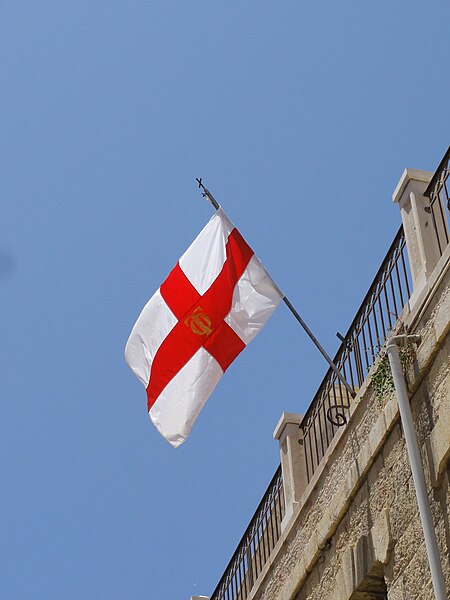
Flag of the Patriarchate with the letters "ΤΦ" (Tau + Phi) representing the word "taphos" (tomb or sepulchre)