Star formation
Videos
Star formation is the process by which dense regions within molecular clouds in interstellar space—sometimes referred to as "stellar nurseries" or "star-forming regions"—collapse and form stars. As a

Westerhout 51 nebula in Aquila – one of the largest star factories in the Milky Way (August 25, 2020)
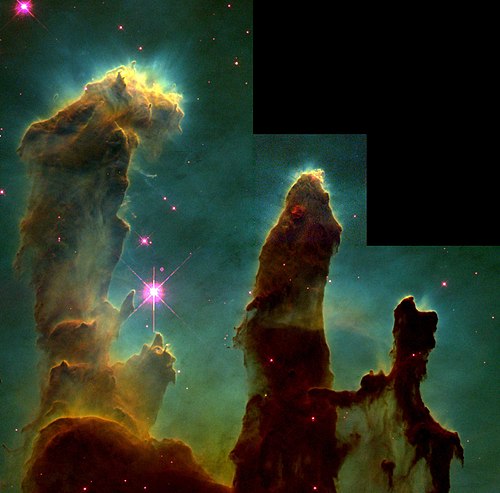
Hubble Space Telescope image known as Pillars of Creation, where stars are forming in the Eagle Nebula
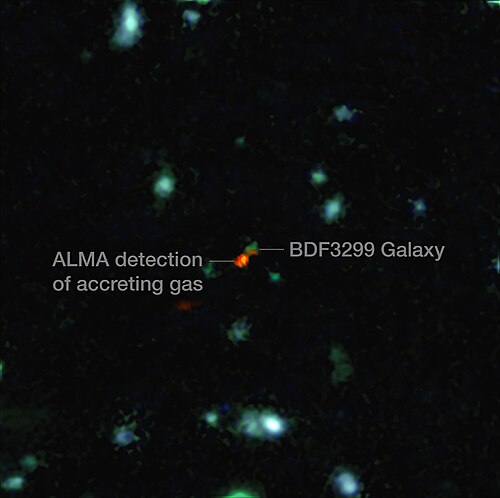
Assembly of galaxy in early Universe

ALMA observations of the Orion Nebula complex provide insights into explosions at star birth.
Star
Videos
A star is a luminous spheroid of plasma held together by self-gravity. The nearest star to Earth is the Sun. Many other stars are visible to the naked eye at night; their immense distances from Earth
Star formation
…dense regions within molecular clouds in interstellar space—sometimes referred to as "stellar nurseries" or "star-forming regions"—collapse and form stars. As a branch of astronomy, star formation includes the study of the interstellar medium (ISM) and giant molecular clouds (GMC) as precursors to the…
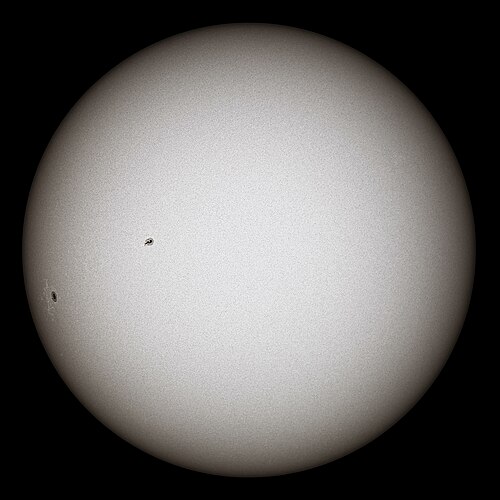
The Sun, a G-type main-sequence star, the closest to Earth

A star-forming region in the Large Magellanic Cloud

Stars in the night sky

Spitzer Space Telescope infrared image showing a multitude of stars in the Milky Way galaxy