State (polity)
Videos
A state is a political entity that rules and governs society and the population within a definite territory, or in other words, it is referred to as the country itself with various administrative divi
The frontispiece of Thomas Hobbes' Leviathan

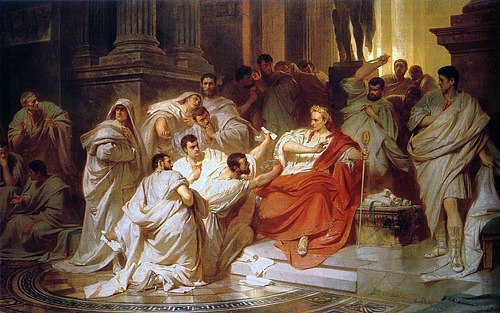
Painting of Roman Senators encircling Julius Caesar
Country
Videos
The term country refers to a political entity or its territory in the world. They function as sovereign states, unrecognized states, constituent countries, or dependent territories. A country may cons
State (polity)
…state is a political entity that rules and governs society and the population within a definite territory, or in other words, it is referred to as the country itself with various administrative divisions. Governments are considered as an apparatus, representative, or instrument of states as such the term is…

A number of non-sovereign entities nevertheless have country codes, such as PF (French Polynesia) and TK (Tokelau)

Early version of the "Wilhelmus" as preserved in a manuscript of 1617 (Brussels, Royal Library, MS 15662, fol. 37v-38r)