Stone veneer
Videos
Photos
Stone veneer is a thin layer of any stone used as decorative facing material that is not meant to be load bearing. Stone cladding is a stone veneer, or simulated stone, applied to a building or other structure made of a material other than stone. Stone cladding is sometimes applied to concrete and steel buildings as part of their original architectural design.

A row of Victorian, brick-built terraced houses in Bury, Greater Manchester, England (2008). One of the houses has been stone-clad.

Close-up of the face of Christ the Redeemer in Rio de Janeiro, Brazil. It is made of reinforced concrete clad in a mosaic of thousands of triangular soapstone tiles.
Ashlar
Videos
Photos
Ashlar is a cut and dressed stone, worked using a chisel to achieve a specific form, typically rectangular in shape. The term can also refer to a structure built from such stones.

Dry ashlar masonry laid in parallel courses on an Inca wall at Machu Picchu
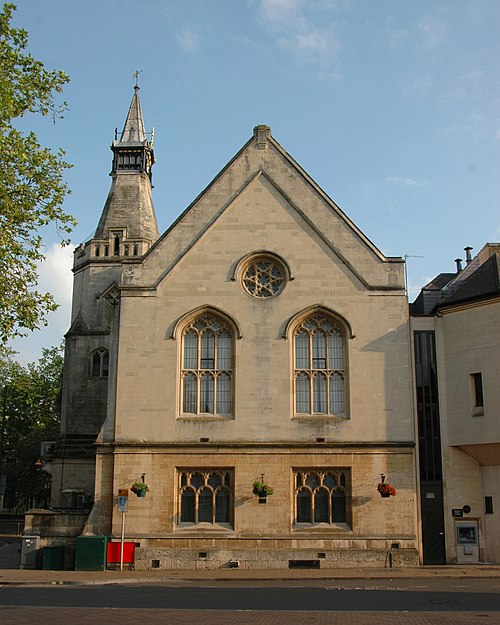
Ashlar masonry north gable of Banbury Town Hall, Oxfordshire

Ashlar polygonal masonry in Cuzco, Peru

Quarry-faced red Longmeadow sandstone in random ashlar was specified by architect Henry Hobson Richardson for the North Congregational Church (Springfield, Massachusetts, 1871). Although each block was cut with great precision on adjacent faces, the external face was left rough as when removed from the quarry. The blocks were laid randomly without continuous courses or vertical and horizontal joints.