Strait of Magellan
Videos
The Strait of Magellan, also called the Straits of Magellan, is a navigable sea route in southern Chile separating mainland South America to the north and the Tierra del Fuego archipelago to the south
The Strait of Magellan at the southern tip of South America


A replica of Victoria, one of Magellan's ships, in the Museo Nao Victoria, Punta Arenas, Chile

USS Ronald Reagan passing through the Strait of Magellan in 2004
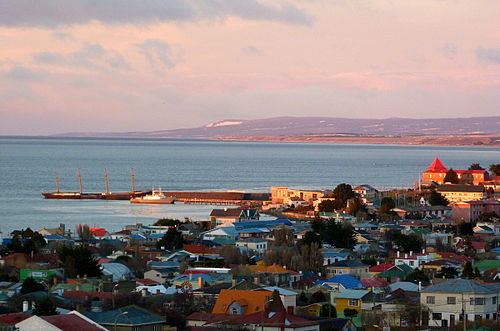
The County of Peebles and Cavenga are used as a breakwater for the harbour at Punta Arenas.
Drake Passage
Videos
The Drake Passage or Sea of Hoces is the body of water between Cape Horn in Chile at the southern extreme of the South American mainland and the South Shetland Islands of Antarctica. It connects the s
Strait of Magellan
…due to frequent narrows and unpredictable winds and currents. Maritime piloting is now compulsory. The strait is shorter and more sheltered than the Drake Passage (the open sea route around Cape Horn), which is beset by frequent gale-force winds and icebergs. Along with the Beagle Channel, the strait was one of…

Tourist expedition ship sailing across the Drake Passage to Antarctica

The plot shows a yearly average (2020) of the surface current strength (from GODAS dataset), together with streamlines. Following the streamlines, it is easy to see that the current is not closed in itself but interacts with the other ocean basins (connecting them). The Drake Passage plays a major role in this mechanism.

The Drake Passage influences the global surface temperature and Atlantic circulation.

Rough seas are common in the Drake Passage