Suret language
Videos
Suret, also known as Assyrian, is any of several varieties of Northeastern Neo-Aramaic spoken by the modern Assyrian people. The various NENA dialects descend from Old Aramaic, the lingua franca in th

Manishtushu Obelisk in Akkadian language (detail). The obelisk was erected by Manishtushu, son of Sargon the Great, under the Akkadian Empire in Mesopotamia (modern-day Iraq) circa 2270–2255 BCE.
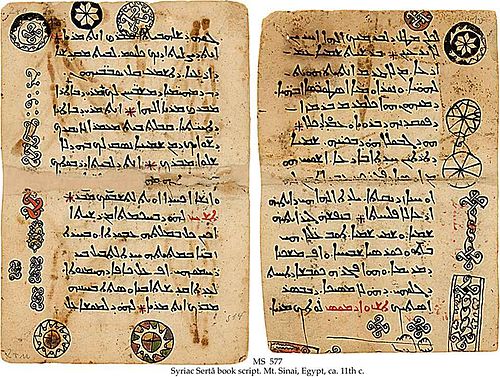
An 11th-century Classical Syriac manuscript, written in Serto script

An 18th-century gospel Book from the Urmia region of Iran

Papyrus fragment of the 9th century written in Serto variant. A passage from the Acts of the Apostles is recognizable
Syriac alphabet
Videos
The Syriac alphabet is a writing system primarily used to write the Syriac language since the 1st century. It is one of the Semitic abjads descending from the Aramaic alphabet through the Palmyrene al
Suret language
…use loanwords borrowed from the languages of their respective countries. Suret is written from right-to-left and it uses the Madnḥāyā version of the Syriac alphabet. Suret, alongside other modern Aramaic languages, is now considered endangered, as newer generations of Assyrians tend to not acquire the full language…
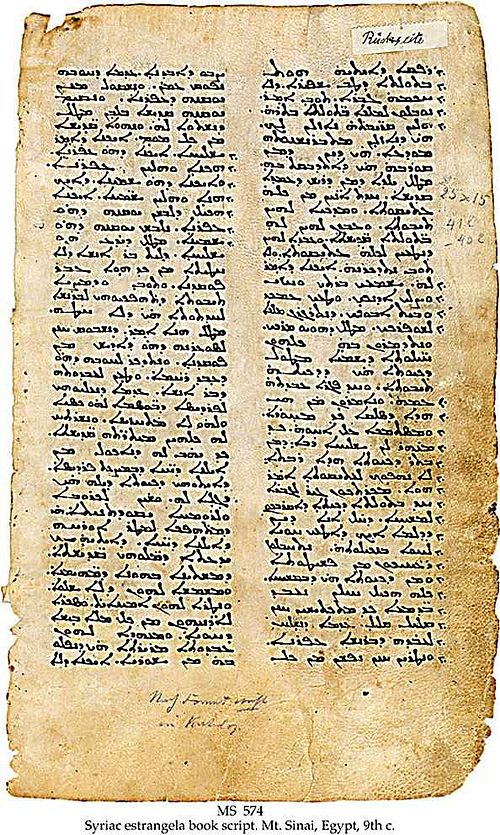
A 9th century ʾEsṭrangēlā manuscript of John Chrysostom's Homily on the Gospel of John.

A 17th century Maḏnḥāyā liturgical manuscript from the Vatican Library. Note the title written in ʾEsṭrangēlā.

A 16th century Sertā manuscript of the New Testament Epistle of James.

An example of Garshuni: a 16th-century Arabic-language manuscript written in the Syriac Serṭā script.