Tamil-Brahmi
Videos
Tamili, also known as Tamil-Brahmi or Damili, was a variant of the Brahmi script in southern India. It was used to write inscriptions in Old Tamil. The Tamil-Brahmi script has been paleographically an

Mangulam Tamil-Brahmi inscription at Dakshin Chithra, Chennai. It was discovered by Robert Sewell in 1882, and deciphered by Subrahmanya Aiyer in 1924.

A 2nd-century BCE Tamil Brahmi inscription from Arittapatti, Madurai India. The southern state of Tamil Nadu has emerged as a major source of Brahmi inscriptions dated between the 3rd and 1st centuries BCE.

Stone bed with inscription in Sittanavasal, Tamil Brahmi Inscriptions
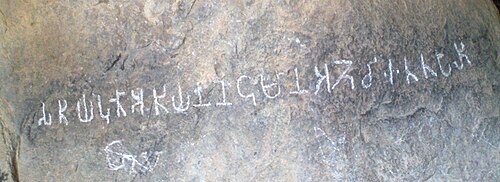
Jambai Tamil Brahmi inscription
Vatteluttu
Videos
Vatteluttu, also transliterated as Vattezhuthu, was an alphasyllabic or syllabic writing system of south India and Sri Lanka formerly employed for writing the Tamil and Malayalam languages. The script
Tamil-Brahmi
…vowel that was the norm in ancient India. According to Kamil Zvelebil, Tamil-Brahmi script was the parent script that ultimately evolved into the later Vatteluttu and Tamil scripts. An early mention of a script for writing the Tamil language is found in the Jaina work Samavayanga Sutta and Pannavana Sutta where…

Evolution of Vaṭṭeḻuttu (script)

Velvikudi Grant (8th century, Tamil)

Quilon Plates (9th century, Old Malayalam)

Jewish Plates (11th century, Old Malayalam)