Terracotta Army
Videos
The Terracotta Army is a collection of terracotta sculptures depicting the armies of Qin Shi Huang, the first emperor of China. It is a form of funerary art buried with the emperor in 210–209 BCE in h


51714 Terracota Army

The mound where the tomb is located

View of the Terracotta Army

Mausoleum of the First Qin Emperor, Hall 1
Mausoleum of Qin Shi Huang
Videos
The Mausoleum of Qin Shi Huang is a tomb complex constructed for Qin Shi Huang, the first emperor of the Chinese Qin dynasty. It is located in modern-day Lintong District in Xi'an, Shaanxi. It was con
Terracotta Army
…sculptures depicting the armies of Qin Shi Huang, the first emperor of China. It is a form of funerary art buried with the emperor in 210–209 BCE in his mausoleum with the purpose of protecting him in his afterlife. The figures, dating from approximately the late 200s BCE, were discovered in 1974 by local farmers…
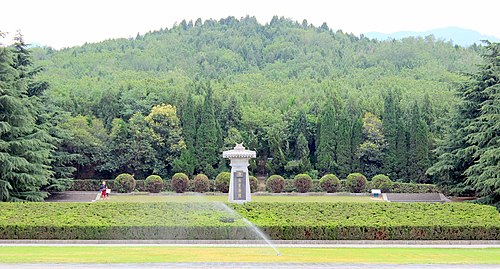
Tomb of the First Emperor Qin Shi Huang Di, Xi'an, China panoramio

Chariot found outside of the tomb mound.

Bronze swan.