The Great Wave off Kanagawa
Videos
The Great Wave off Kanagawa is a woodblock print by the Japanese ukiyo-e artist Hokusai, created in late 1831 during the Edo period of Japanese history. The print depicts three boats moving through a

Print at the Metropolitan Museum of Art

Plate used to print ukiyo-e

Hokusai, 1839 self-portrait

Detail of the centre of the image. In the background is Mount Fuji in blue with a snow-capped peak.
Ukiyo-e
Videos
Ukiyo-e is a genre of Japanese art that flourished from the 17th through 19th centuries. Its artists produced woodblock prints and paintings of such subjects as female beauties; kabuki actors and sumo
The Great Wave off Kanagawa
…The Great Wave off Kanagawa (Japanese: 神奈川沖浪裏, Hepburn: Kanagawa-oki Nami Ura; lit. 'Under the Wave off Kanagawa') is a woodblock print by the Japanese ukiyo-e artist Hokusai (1760–1849), created in late 1831 during the Edo period of Japanese history. The print depicts three boats moving through a storm-tossed…
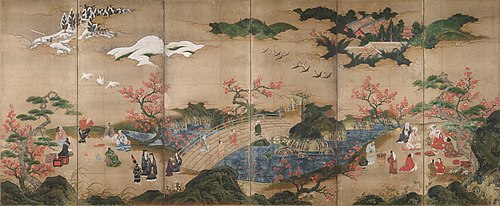
Maple Viewing at Takao (mid-16th century) by Kanō Hideyori is one of the earliest Japanese paintings to feature the lives of the common people.

Tokugawa Ieyasu established his government in the early 17th century in Edo (modern Tokyo).Portrait of Tokugawa Ieyasu, Kanō school painting, Kanō Tan'yū, 17th century
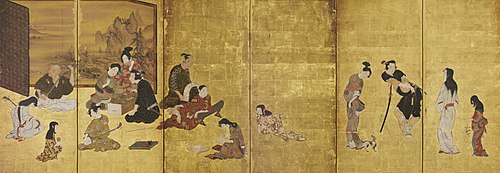
The Hikone screen may be the oldest surviving ukiyo-e work, dating to c. 1624–1644.

Early woodblock print, Hishikawa Moronobu, late 1670s or early 1680s