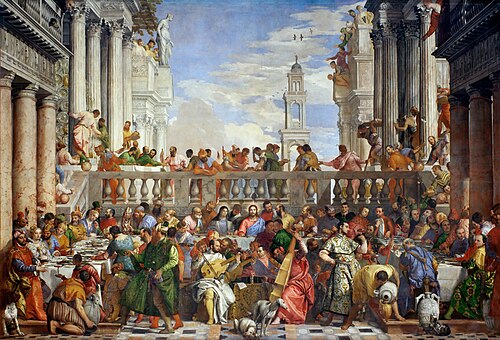
The Wedding at Cana, by Paolo Veronese, is a representational painting that depicts the biblical story of the Wedding at Cana, at which Jesus miraculously converts water into red wine. Executed in the
Paolo Veronese 008

In 1562, the Benedictine monks commissioned Paolo Veronese to realise The Wedding Feast at Cana as a monumental painting (6.77 m × 9.94 m) to occupy the back wall of the monastery's refectory, at the San Giorgio Monastery, Venice.
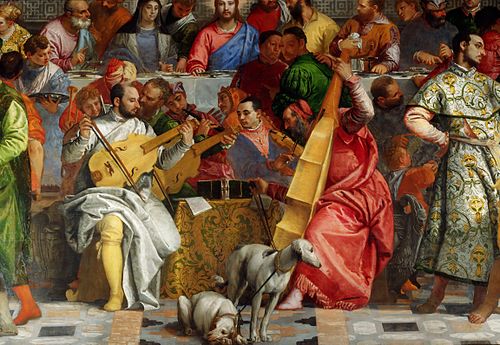
The musicians providing ambience for The Wedding Feast at Cana are personified by Veronese (viola da braccio), and the principal painters of the Venetian school: Jacopo Bassano (cornetto), Tintoretto (viola da braccio) and Titian (violone); standing beside Titian is the poet Pietro Aretino. (detail, lower centre-plane)

In The Wedding Feast at Cana, Veronese shows the sated guests at the nuptial banquet-table awaiting the dessert-course wine service. The guests awaiting the new, red wine include Suleiman the Magnificent, an elegant woman discreetly cleaning her teeth with a toothpick, and a woman urging her husband to ask the bride about the new red wine they have been served. (detail, left lower-quarter)
Mannerism
Videos
Mannerism is a style in European art that emerged in the later years of the Italian High Renaissance around 1520, spreading by about 1530 and lasting until about the end of the 16th century in Italy,
The Wedding at Cana (Veronese)
…painting that depicts the biblical story of the Wedding at Cana, at which Jesus miraculously converts water into red wine (John 2:1–11). Executed in the Mannerist style (1520–1600) of the late Renaissance, the large-format (6.77 m × 9.94 m or 22 ft 3 in × 32 ft 7 in) oil painting comprehends the stylistic ideal of…
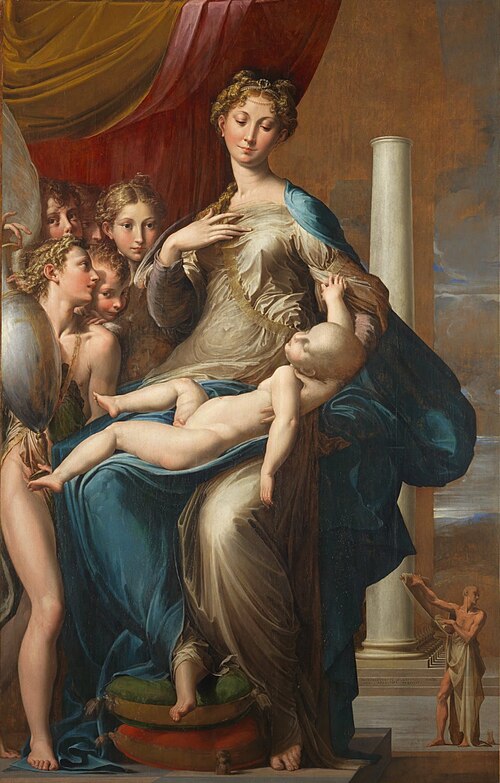
In Parmigianino's Madonna with the Long Neck (1534–1540), Mannerism makes itself known by elongated proportions, highly stylized poses, and lack of clear perspective.
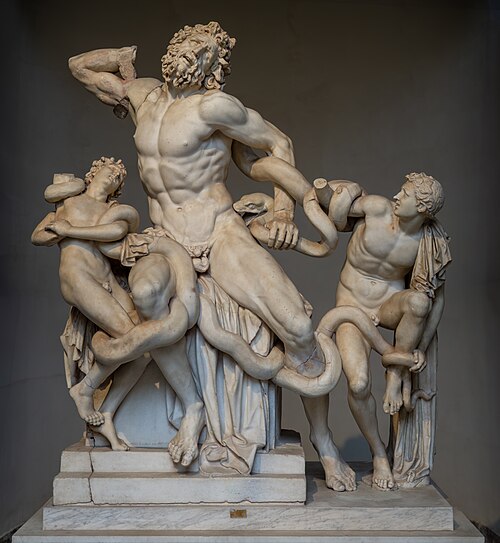
Model for Mannerism: Laocoön and His Sons, an ancient sculpture, rediscovered in 1506; now in the Vatican Museums. The artists of Mannerism greatly admired this piece of sculpture.

Collected figures, ignudi, from Michelangelo's Sistine Chapel ceiling

Copy after lost original, Michelangelo's Battaglia di Cascina, by Bastiano da Sangallo, originally intended by Michelangelo to compete with Leonardo's entry for the same commission