Theodosius I
Videos
Theodosius I, also known as Theodosius the Great, was Roman emperor from 379 to 395. He won two civil wars and was instrumental in establishing the Nicene Creed as the orthodox doctrine for Nicene Chr
Bust of an emperor found in Aphrodisias (Aydın, Turkey), most likely Theodosius I


The administrative divisions of the Roman Empire in 395, under Theodosius I.

Solidus of Theodosius, showing both him and his co-emperor Valentinian II (r. 375–392) enthroned on the reverse, each crowned by Victory and together holding an orb victoria augg ("the Victory of the Augusti")

Marble fragment of monumental column to emperor Theodosius I
Byzantine Empire
Videos
The Byzantine Empire, also known as the Eastern Roman Empire, was the continuation of the Roman Empire centred on Constantinople during late antiquity and the Middle Ages. Having survived the fall of
Theodosius I
…Christianity. Theodosius was the last emperor to rule the entire Roman Empire. After his death, his sons Arcadius and Honorius ruled from separate courts in the east and the west, continuing the late Roman practice of rule by multiple emperors. He ended the Gothic War (376–382) with the Goths remaining politically…

Constantine I, also known as Constantine the Great, was Roman emperor from AD 306 to 337 and the first Roman emperor to convert to Christianity. He founded the city of Constantinople (now Istanbul) and made it the capital of the Empire, which it remained for over a millennium.

The Theodosian Walls of Constantinople, very important during the 717–718 siege
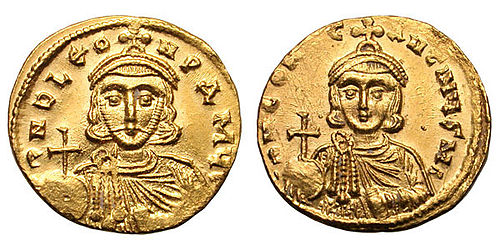
Gold solidus of Leo III (left) and his son and heir, Constantine V (right)

The seizure of Edessa (1031) by the Byzantines under George Maniakes and the counterattack by the Seljuk Turks