Thermoacoustics
Videos
Thermoacoustics is the interaction between temperature, density and pressure variations of acoustic waves. Thermoacoustic heat engines can readily be driven using solar energy or waste heat and they can be controlled using proportional control. They can use heat available at low temperatures which makes it ideal for heat recovery and low power applications. The components included in thermoacoustic engines are usually very simple compared to conventional engines. The device can easily be controlled and maintained.

Fig. 1. a: Plot of the amplitudes of the velocity and displacements, and the pressure and temperature variations in a half-wavelength tube of a pure standing wave. b: corresponding δT – δx plots of a standing wave. c: δT – δx plots of a pure traveling wave.

Fig. 2. a: schematic diagram of a thermoacoustic prime mover; b: schematic diagram of a thermoacoustic refrigerator.

Fig. 3. Schematic drawing of a travelling-wave thermoacoustic engine
John William Strutt, 3rd Baron Rayleigh, was a British mathematician and physicist who made extensive contributions to science. He spent all of his academic career at the University of Cambridge. Among many honours, he received the 1904 Nobel Prize in Physics "for his investigations of the densities of the most important gases and for his discovery of argon in connection with these studies." He served as president of the Royal Society from 1905 to 1908 and as chancellor of the University of Cambridge from 1908 to 1919.
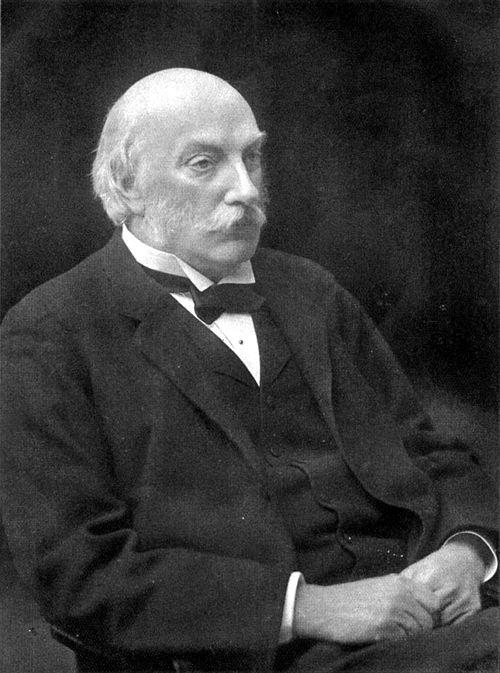

Caricature of Lord Rayleigh in the London magazine Vanity Fair, 1899

Theory of sound, 1894