Third Punic War
Videos
The Third Punic War was the third and last of the Punic Wars fought between Carthage and Rome. The war was fought entirely within Carthaginian territory, in what is now northern Tunisia. When the Seco

A silver double shekel from Carthage's last minting of coins before its destruction

Catapulta by Edward Poynter, 1868; modern depiction of a Roman siege engine during the siege of Carthage

Arrowheads, remains of a dagger and stones for slings exhibited at the National Museum of Carthage
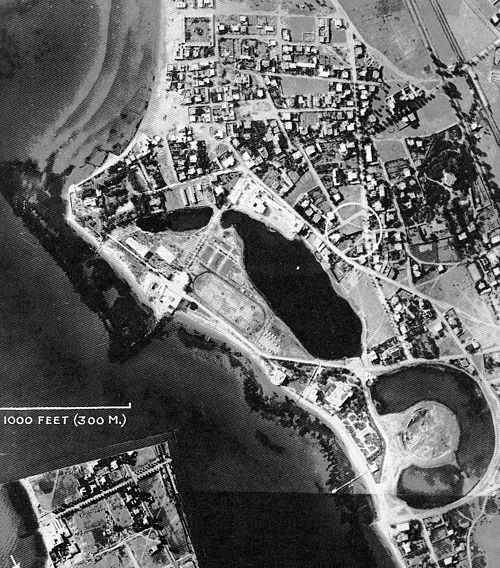
A World War II United States Army Air Forces aerial reconnaissance photograph of the remains of the naval base of the city of Carthage. The remains of the mercantile harbour are in the centre and those of the military harbour are bottom right. (North is to the bottom-right)
The siege of Carthage was the main engagement of the Third Punic War fought between Carthage and Rome. It consisted of the nearly three-year siege of the Carthaginian capital, Carthage. In 149 BC, a l
Third Punic War
…40,000–50,000 men, of whom 4,000 were cavalry. The Roman army moved to Carthage, unsuccessfully attempted to scale the city walls, and settled down for a siege. They set up two camps under command of legates: Censorinus' had the primary role of protecting the beached Roman ships and Manilius's housed the Roman…

Polybius