Tintype
Videos
A tintype, also known as a melanotype or ferrotype, is a photograph made by creating a direct positive on a thin sheet of metal, colloquially called 'tin', coated with a dark lacquer or enamel and use

Tintype of two girls in front of a painted background of the Cliff House and Seal Rocks in San Francisco, c. 1900

Studio tent of ferrotypist J. Q. Galusha, 12,7 × 17,7 cm, USA, c. 1880–1900

Tintype portraits in an album, circa late 1800s-early 1900s

The only surviving portrait of Billy the Kid, Fort Sumner, c. 1879–80
Daguerreotype
Videos
Daguerreotype was the first publicly available photographic process, widely used from the 1830s to 1850s. "Daguerreotype" also refers to an image created through this process.
Tintype
…emulsion. It was introduced in 1853 by Adolphe Alexandre Martin in Paris. It competed with both the ambrotype process and the older and established daguerreotype, finding particular adoption in North America. Tintypes enjoyed their widest use during the 1860s and 1870s, but lesser use of the medium persisted…

Lucrecia Guerrero Uribe 1848

Daguerreotype portrait of a daguerreotypist displaying daguerreotypes and cases pictured in an airtight frame, 1845

Daguerreotype of Louis Daguerre in 1844 by Jean-Baptiste Sabatier-Blot
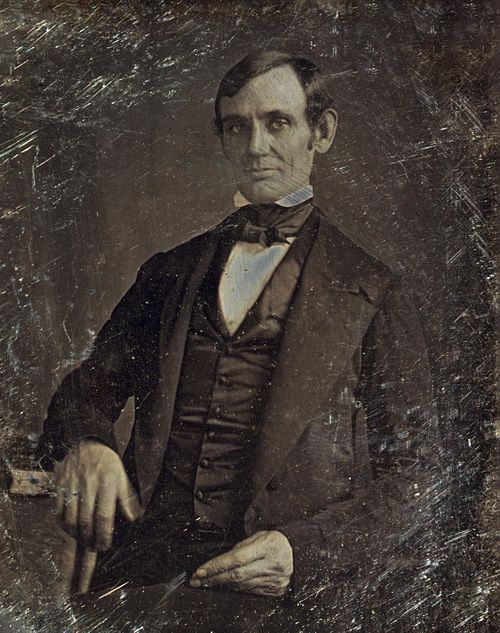
The earliest authenticated image of Abraham Lincoln, taken soon after his election to Congress in 1846, attributed to Nicholas H. Shepard