Tolui
Videos
Tolui was the youngest son of Genghis Khan and Börte. A prominent general during the early Mongol conquests, Tolui was a leading candidate to succeed his father after his death in 1227 and ultimately
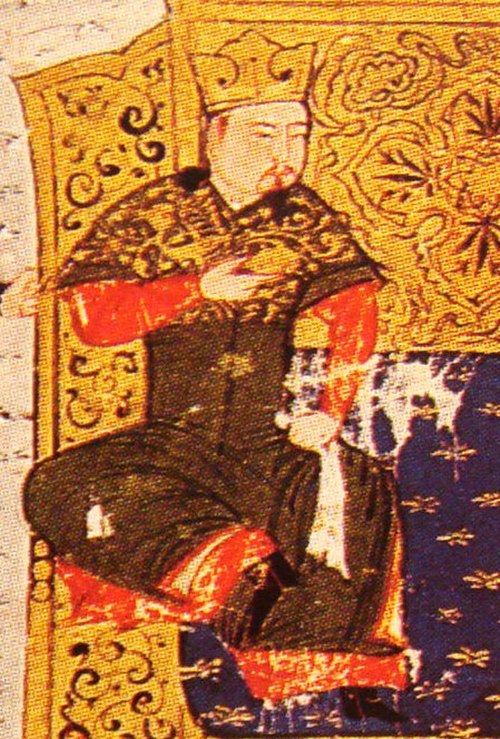
Depiction of Tolui from a 14th-century manuscript of Rashid al-Din's Jami' al-tawarikh

The walls of the city of Merv, which never recovered from the Mongol conquests; the tomb of Ahmad Sanjar can be seen through a gap in the ruined fortifications.

The mausoleum of Attar of Nishapur, a Persian poet who was killed during the sack of Nishapur, was built during the Timurid Renaissance in the 15th century.

Early 15th-century miniature of Genghis Khan advising his sons on his deathbed, taken from Marco Polo's section of the Livre des merveilles manuscript.
Sorghaghtani Beki
Videos
Surqaghtani Beki, posthumously Empress Xianyi Zhuangsheng, was a Keraite princess and daughter-in-law of Genghis Khan. Married to Tolui, Genghis' youngest son, Sorghaghtani became one of the most powe
Tolui
…after his death in 1227 and ultimately served as regent of the Mongol Empire until the accession of his brother Ögedei two years later. Tolui's wife was Sorghaghtani Beki; their sons included Möngke and Kublai, the fourth and fifth khans of the empire, and Hulagu, the founder of the Ilkhanate. Tolui was less active than…

Queen Sorghaghtani with her husband, Tolui. Rashid al-Din Hamadani, early 14th century.