Torrington, Wyoming
Videos
Torrington is a city in and the county seat of Goshen County, Wyoming, United States. The population was 6,119 at the 2020 census, down from 6,501 at the 2010 census.
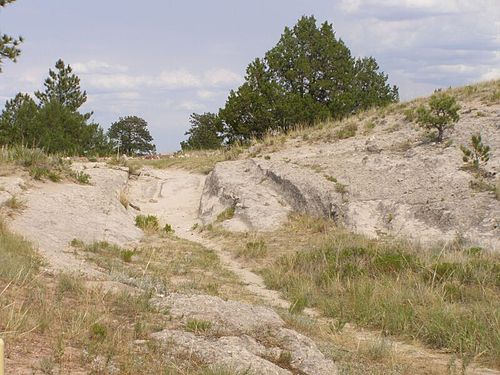
Ruts made by early pioneer's wagons on the historic Oregon Trail in the late 19th Century in Eastern Wyoming (2007 photo)
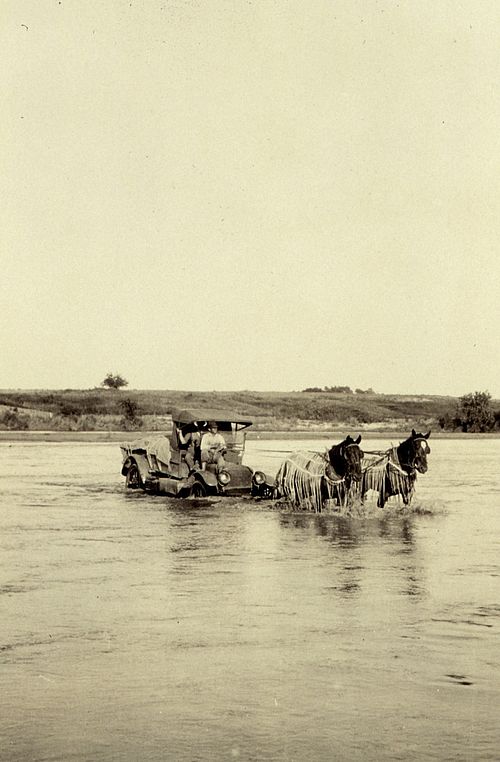
Vintage photo of early 20th Century resident of the West using horses to pull his "horseless carriage" while "fording" a river

Fort Laramie as it looked prior to 1840. Painting by Alfred Jacob Miller

Torrington and Goshen County are home to a large population of Ring-necked Pheasants
Fort Laramie was a significant 19th-century trading post, diplomatic site, and military installation located at the confluence of the Laramie and the North Platte Rivers. They joined in the upper Plat
Torrington, Wyoming
…the North Platte River past the site of the 1854 Grattan Massacre near Lingle, and past the historic western 19th-Century U.S. Army Cavalry outpost, Fort Laramie National Historic Site. Torrington is located at (42.066542, −104.182471). According to the United States Census Bureau, the city has a total area of 4.62 square miles (11.97…

Fort Laramie NHS Gate

Interior of the original Fort Laramie as it looked prior to 1840. Painting from memory by Alfred Jacob Miller.

Fort John (Fort Laramie) was originally built of logs in 1834, then rebuilt in adobe in 1841. This digital reconstruction from a National Park Service/CyArk project is based on archaeological data, descriptions, and illustrations from the period when the Fort still stood. It shows the south and east facades of the high-walled Fort John. As a private trading post it was fortified chiefly to prevent theft of the valuable furs. The name Fort John fell into disuse following the military takeover of the Fort in 1849, and disappeared from records by 1860.