Tuskegee Airmen
Videos
The Tuskegee Airmen were a group of primarily African-American military pilots and airmen who fought in World War II. They formed the 332nd Fighter Group and the 477th Bombardment Group of the United

The P-51C Mustang flown by the Commemorative Air Force in the markings of the 302nd Fighter Squadron as a tribute to Lieutenant Colonel Lee Archer.

Tuskegee Airman P-51 Mustang taken at Airventure. This particular P-51C is part of the Red Tail Project

The Stearman Kaydet training aircraft used by the Tuskegee Airmen, bearing the name Spirit of Tuskegee
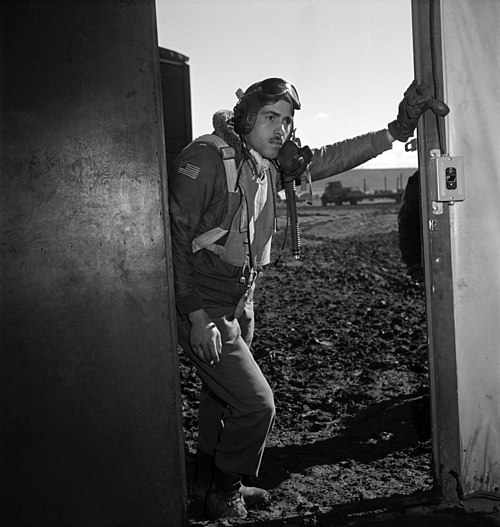
Portrait of Tuskegee airman Edward M. Thomas by photographer Toni Frissell, March 1945
Benjamin O. Davis Jr.
Videos
Benjamin Oliver Davis Jr. was a United States Air Force general and commander of the World War II Tuskegee Airmen.
Tuskegee Airmen
…the U.S. Army built the airfield in only six months. The construction was budgeted at $1,663,057. The airmen were placed under the command of Captain Benjamin O. Davis Jr., one of only two black line officers then serving. During training, Tuskegee Army Air Field was commanded first by Major James Ellison. Ellison made…

Davis c. 1965–1970

Davis in the United States Military Academy yearbook, 1936

Captain Benjamin Oliver Davis Jr. of Washington, D.C., climbing into an Advanced Trainer (Tuskegee, Alabama; January 1942).

Illustration by Charles Henry Alston